

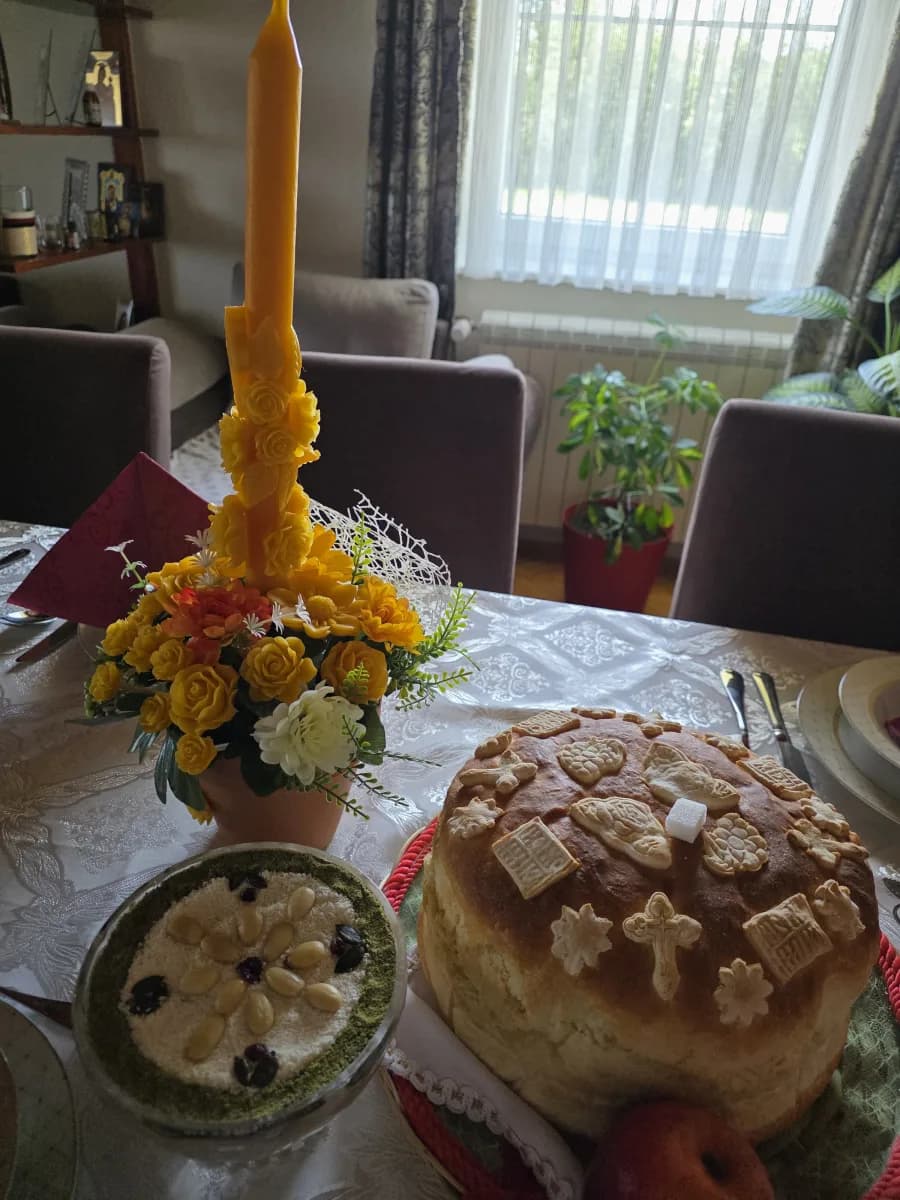
There is something special about the morning of Slava. As the house slowly awakens, the solemn stillness that will soon be broken by the hurried footsteps of the host and hostess, the dressing in their finest clothes, the clinking of the finest cutlery and crystal... and the house filling with wonderful aromas.
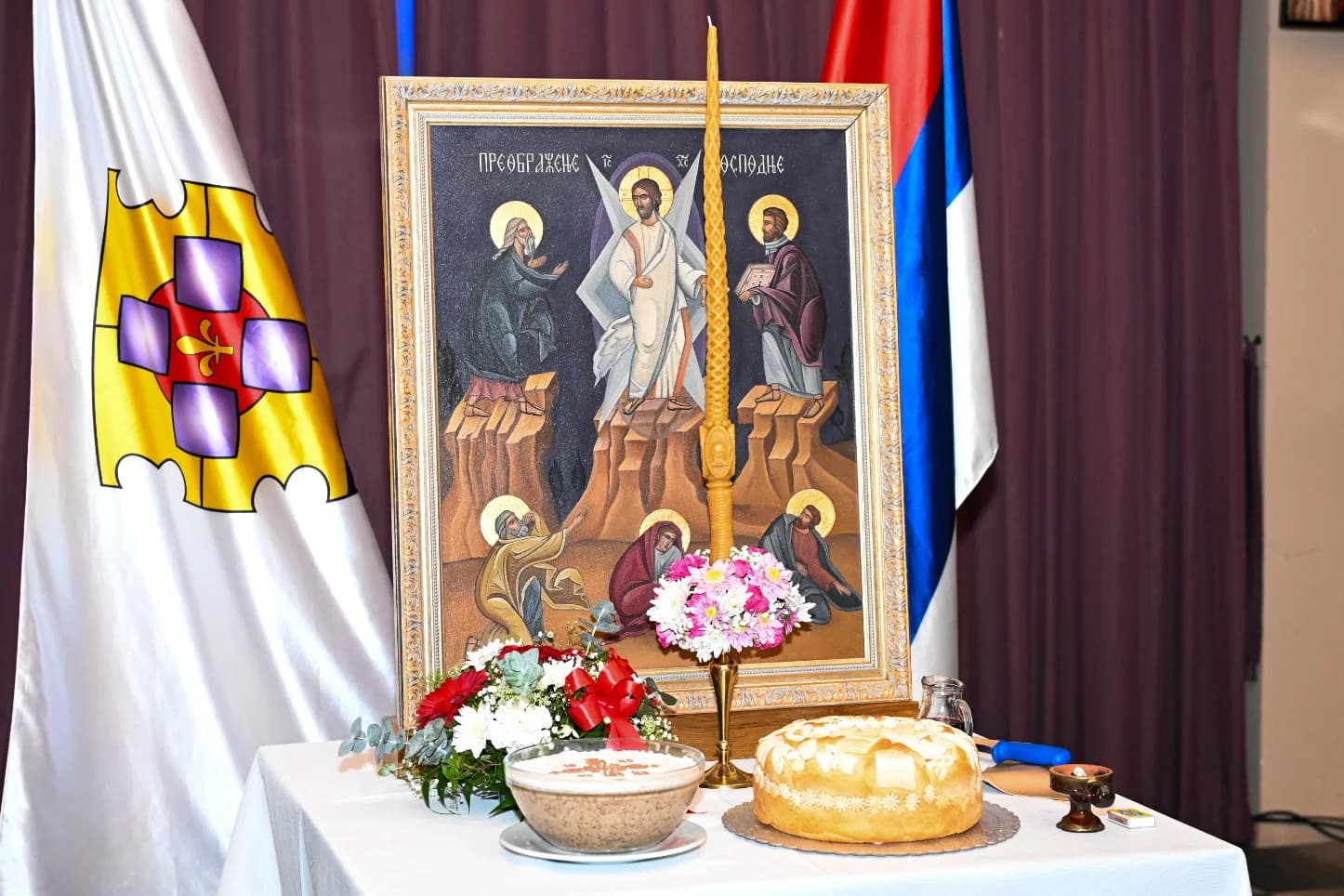
And on the table, the most important things of all—the Slava bread, wheat, red wine and the Slava candle. Times may change and tables may come and go, but in these four gifts the entire essence of Krsna Slava is preserved.
Slava is not merely a holiday and a gathering.
It is a unique tradition throughout the Serbian world, a quiet thread of faith and national identity. Historical records suggest that it was Saint Sava who gave Krsna Slava its recognisable liturgical character, redirecting old folk customs towards the essence of Christian communion.
Krsna Slava is a commemoration of the saint who is the protector of the household, but also a profound sense that we are not alone, but part of something greater and older than ourselves.
A Tradition That Connects: One Essence, Different Customs
Depending on the region where it is celebrated—from the Dinaric Mountains, through Slavonia and Krajina, all the way to the south and the Serbian diaspora—the customs surrounding Krsna Slava carry their own local imprint. In some places, the bread is taken to church early in the morning; elsewhere, a priest comes to the home; in some regions, guests are welcomed with Slava songs, while in others, the emphasis is on a quiet family gathering.
Yet, regardless of these differences in detail shaped by the historical circumstances of various regions, the essence has remained exactly the same everywhere: gathering around the table, bread, wine, wheat and a candle.
Bread and Wine – The Bread of Life and the Joining of Hands
While the vigil lamp burns before the icon of the patron saint of the home and family, the Slava bread stands at the centre of the festive table. Made from pure wheat flour with the addition of holy water, it preserves within it the earth, the grain, prayer, the hands of our ancestors and the hopes of their descendants.
At the centre of the bread and on its four sides, forming a cross, a special Slava seal is impressed with the letters IS HS NI KA (“Jesus Christ Conquers”).
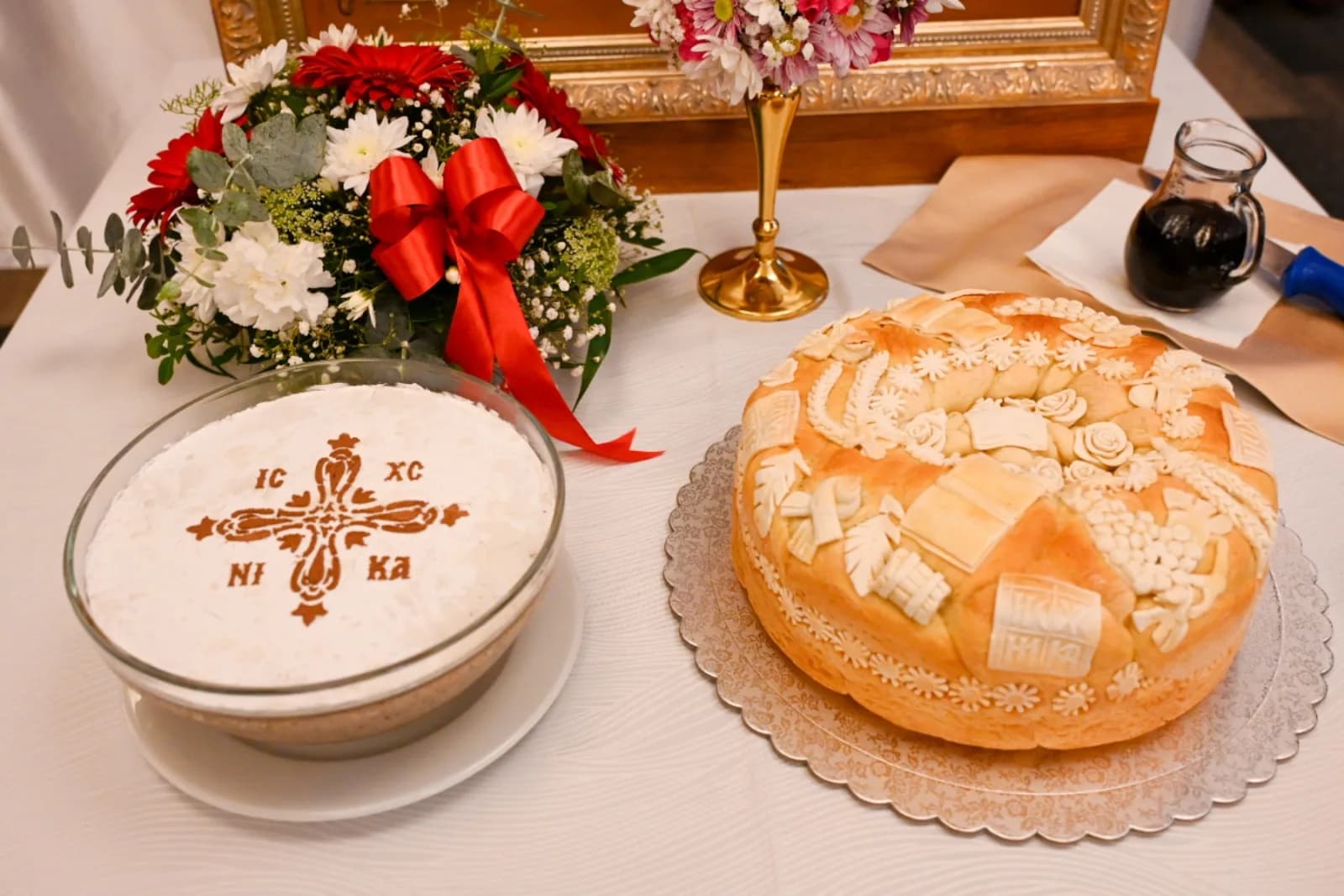
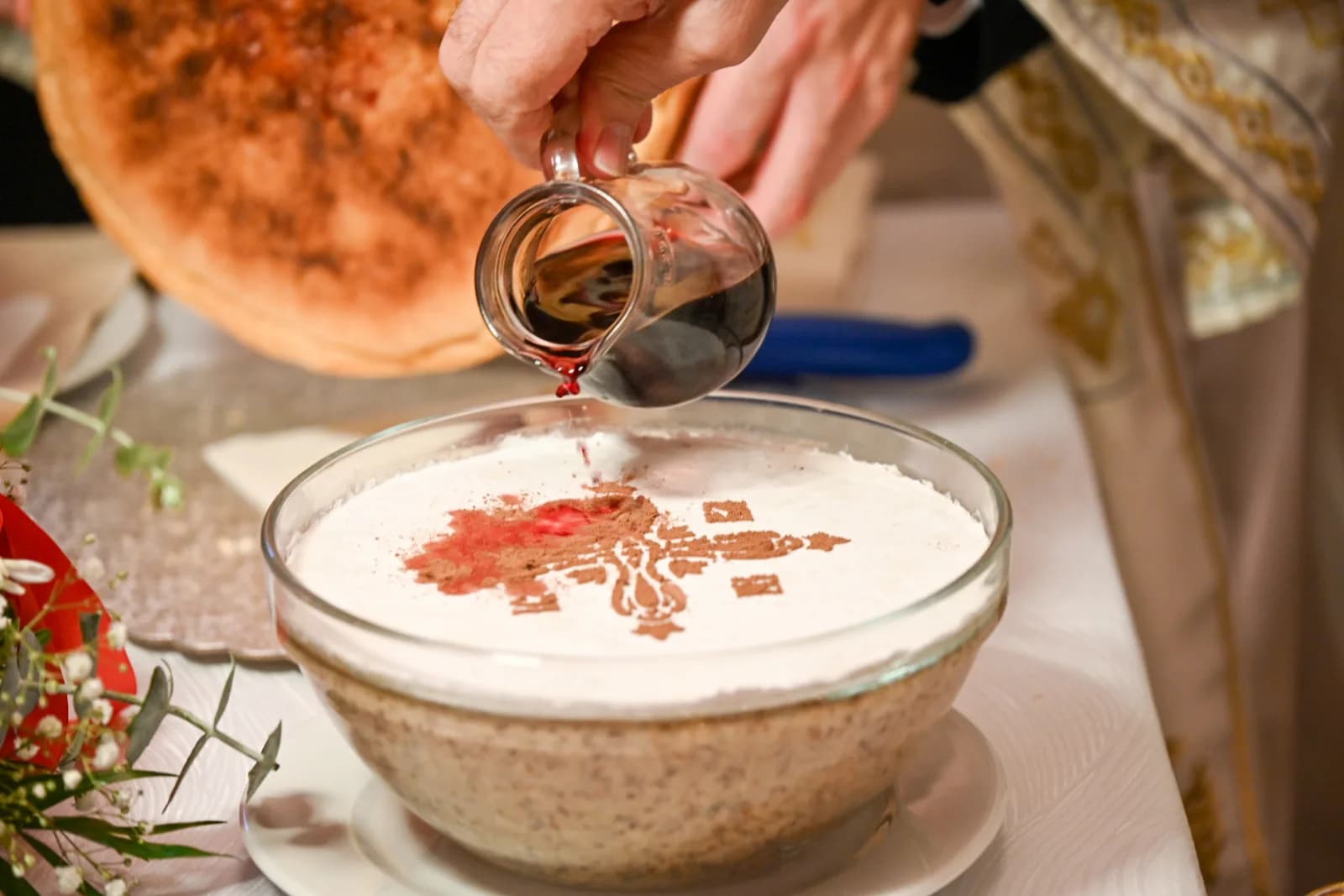
Decorations made of dough—an ear of wheat, a bunch of grapes, a bird or an open book—are not there merely for aesthetic reasons; they are small, silent prayers and wishes for a fruitful year, peace, health and wisdom in the home. The bread itself symbolises Christ, who is the “bread of life”, while the red wine poured over the bread after it is cut symbolises joy and sacrifice.
The most solemn moment is the breaking of the bread itself. As it is turned in a circle, the hands of the host, family members, children and priest come together above it; everyone holds the same bread and shares the same prayer.
Wheat, Candle and Icon: Memory and Gratitude
Beside the bread stands koljivo, fragrant cooked wheat with honey and walnuts, another gift prepared by the devoted hands of the hostess. Slava wheat is not prepared for the repose of the saint’s soul, as it is sometimes mistakenly understood, but in his honour and as a sign of gratitude and remembrance of all the ancestors who celebrated the same Slava in our home before us. It reminds us of continuity and resurrection: the grain must enter the earth in order to produce new fruit.
A Story That Lives Within Us
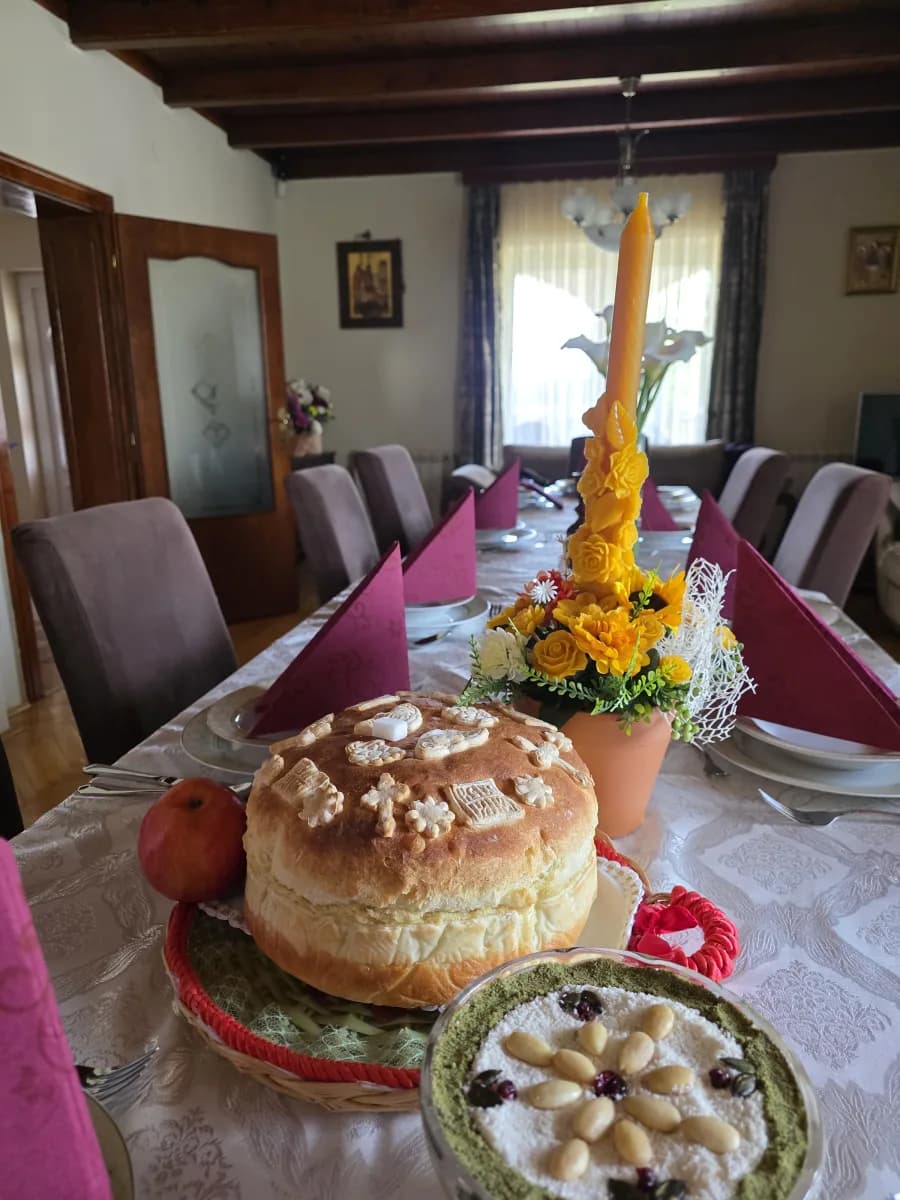
Regardless of whether the festive table is fasting or non-fasting, it is above all an expression of Christian hospitality and the warmth of the home. When the celebration is over, the conversations grow quiet and the guests depart, what remains in our memory is not the abundance of food, but the scent of incense, the taste of blessed wheat and that unique feeling when the hands of the people we love come together over the Slava bread.
Slava continually brings us back to simplicity, teaching us that we do not need much for what matters most—a little bread to share, a sip of wine for joy, wheat for remembrance and an open heart for everyone who enters our home.
And as the flame of the Slava candle slowly burns down, while only the scent of incense and wax remains in the quiet of the evening, we realise that Slava is not merely a day on the calendar. It is the quiet guardian of our hearth.
As long as the scent of Slava bread fills our homes and there is someone to light the candle, our ancestors are not forgotten, and our children know where their roots lie.
Because breaking the Slava bread means loving, remembering and enduring.
For those who would like to read more about the spiritual foundations, history and customs of celebrating Krsna Slava, we recommend the texts on the websites https://spclondon.org.uk/sr/duhovne-poruke/263-o-krsnoj-slavi and https://crkvenikalendar.rs/srpske-slave/
