

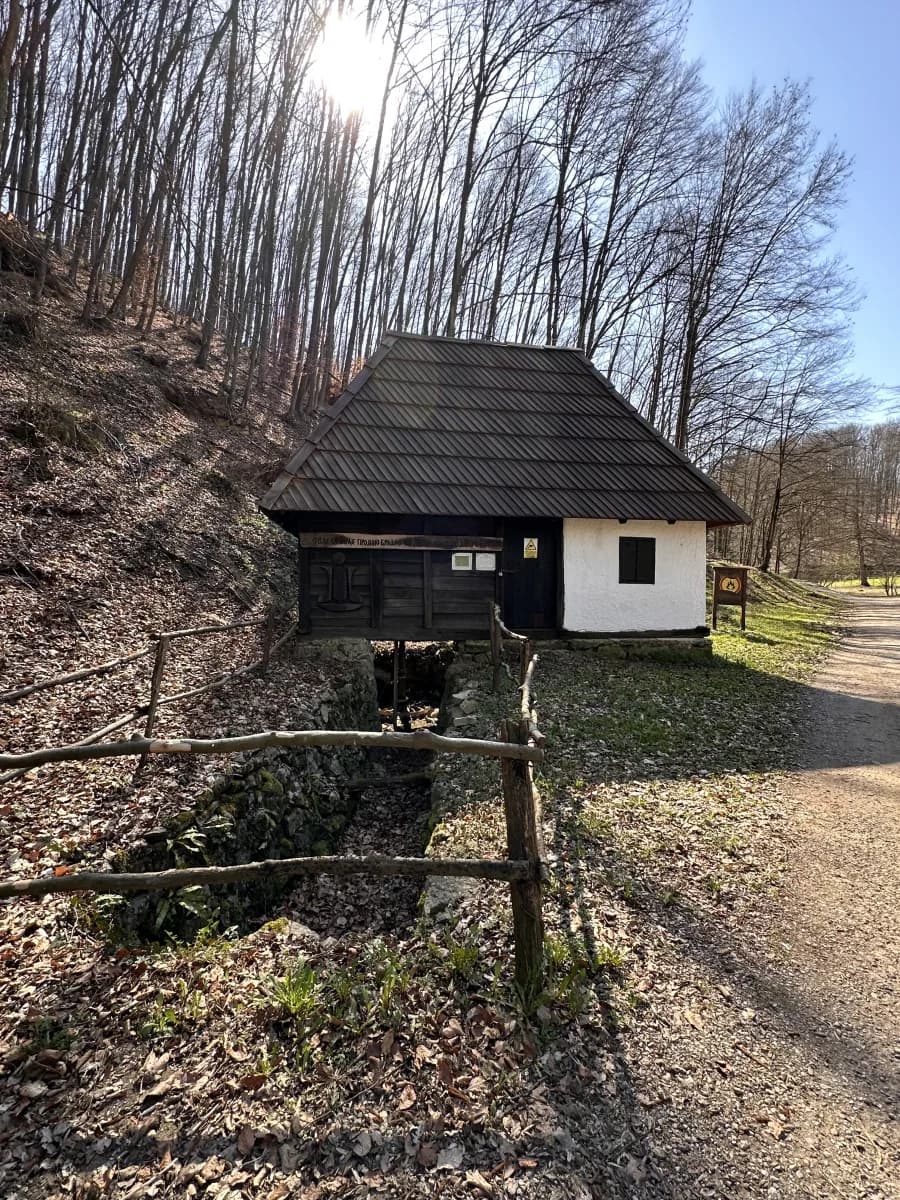
There is something special about the sound of a watermill. Water flows through the channel, strikes the wooden wheel and sets the millstone in motion, turning at its slow, steady rhythm. There is no noise of machines and no rush. Just water, stone and grain being transformed into flour.
Once, there were almost watermills like these in every part of the country. They ground corn and wheat for household needs and were an important part of village life. Many, however, gradually fell silent. Some were taken by time, some were left without owners, while others lost their purpose when modern mills replaced them.
Today, some of them are coming back to life.
Not only as reminders of a different time, but also as an opportunity to turn a traditional craft into a business.
When the Family Mill Starts Working Again
The restoration of an old watermill usually begins with a family story. Somewhere, there is a mill once used by a grandfather or great-grandfather; somewhere else, a neglected building has spent years waiting for someone to recognise its value.
Once the wooden parts, mechanism and millstone are repaired, and the water supply starts flowing again, something that had stood idle for years takes on a new purpose. For the owner, it can mean more than preserving a family memory.
It can become a source of income.
Flour produced in a small watermill does not try to compete with industrial products in terms of quantity. Its value lies in a different story: the traditional method of milling, small-scale production and the possibility for the customer to know where the product comes from.
Corn, wheat, buckwheat and other types of flour can be sold directly to customers, as well as to restaurants, bakeries, rural households and other buyers looking for homemade and locally produced goods.
From Grain to Product
The greatest value of this kind of production is not only in the flour itself. If the grain is grown locally, part of the money remains with local producers. The miller receives the raw material, processes it and sells the finished product, while restaurants can turn the flour into a dish that guests will remember. In this way, a single old mill can connect several small businesses.
The farmer grows corn or wheat. The miller processes it. The restaurant uses the flour to make cornbread, homemade bread, polenta or cicvara. A rural household can offer all of this to its guests.
What may seem like a small business can thus become part of a broader local economy.
And that is one of the opportunities for rural areas—to turn what already exists into a product with added value.
Flour with a Name and a Place of Its Own
Today, customers increasingly want to know what they are buying. They are interested in the origin of the raw materials, the production method and the people behind the product. This is where a small watermill has an advantage.
The packaging does not have to carry only the name of the product. It can also feature the name of the village, the name of the watermill or the family that restored the old mill. The flour can come with the story of how it was made.
Such a product is no longer just food; it becomes a local product with its own identity. And that is precisely what can help small producers find their place in a market that is not based solely on quantity and low prices.
The Watermill as Part of the Tourism Offer
An old watermill can take on another role. A tourist one.
For a guest who comes to the countryside, accommodation alone is not always enough. They want something to see, taste, learn about or take home with them. A watermill offers all of this.
They can see how water turns the wheel, how grain becomes flour and what a craft that was once part of everyday life looks like. They can buy flour, taste homemade bread or one of the traditional dishes and continue their journey with a story they could never experience in the city.
If the watermill is connected with a rural household, restaurant, picnic area or other attractions in the surrounding area, its value increases even further. The mill then becomes more than just a place of production. It becomes a place that people pass through.
Simply Getting the Wheel Turning Is Not Enough
Restoring a watermill is neither simple nor inexpensive. The building, mechanism and watercourse all need to be restored, after which the conditions for production and the sale of the products must be secured. Even more importantly, customers need to be found.
That is where the real work begins. An owner who wants to turn a watermill into a source of income has to think about the quality of the grain, production continuity, packaging, pricing and sales channels. Some will rely on customers from their local area, others on restaurants and bakeries, while some will develop direct sales or connect production with tourism.
That is why an old watermill alone is no guarantee of success.
It is a starting point. A tradition that can make a living
At a time when there is much talk about rural development, keeping young people in the countryside and the need to give greater value to domestic production, old watermills can offer an interesting example of how tradition can be integrated into the modern economy.
They cannot replace large mills, nor should they. Their opportunity lies precisely in being small.
In a distinctive product, a known origin, a direct relationship with the customer, as well as in the story carried by every village and every family that has decided to preserve an old watermill.
And when the product is accompanied by an experience—the sound of flowing water, the wooden wheel, the aroma of freshly milled flour and homemade bread on the table—something that was once completely ordinary becomes something worth experiencing.
Perhaps that is why the return of watermills matters in another way as well.
They restore value to what was already here—the land, the work, the local product and the knowledge passed down through generations.
An old mill can thus become a new business. And a family craft can become a small economic story with its own place in the future.
