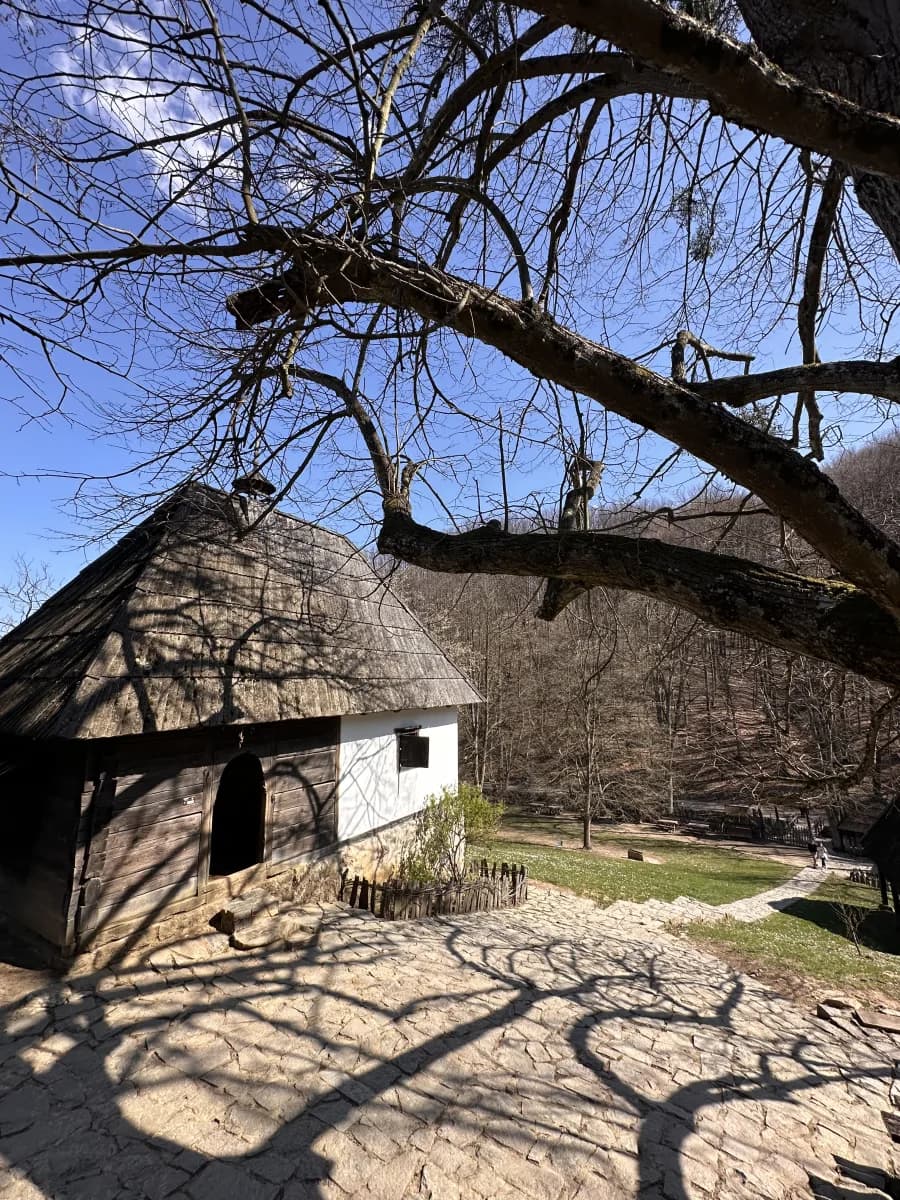
In the Žeravija Valley, among old log houses, watermills and orchards, a picture has been preserved of the Serbian village as Vuk Stefanović Karadžić knew it in his childhood. That is why Tršić is much more than a memorial complex - it is a place where one can understand the world from which the man who left a profound mark on the Serbian language and culture came.
When you arrive in Tršić, you will first encounter the modern world. A paved parking lot, shops, but also the kind-hearted people of this region who will ask how you are doing.
Yet here in the Žeravija Valley, beneath the wooded hills, Tršić has preserved something that is increasingly difficult to find in the modern world - the complete picture of an era.
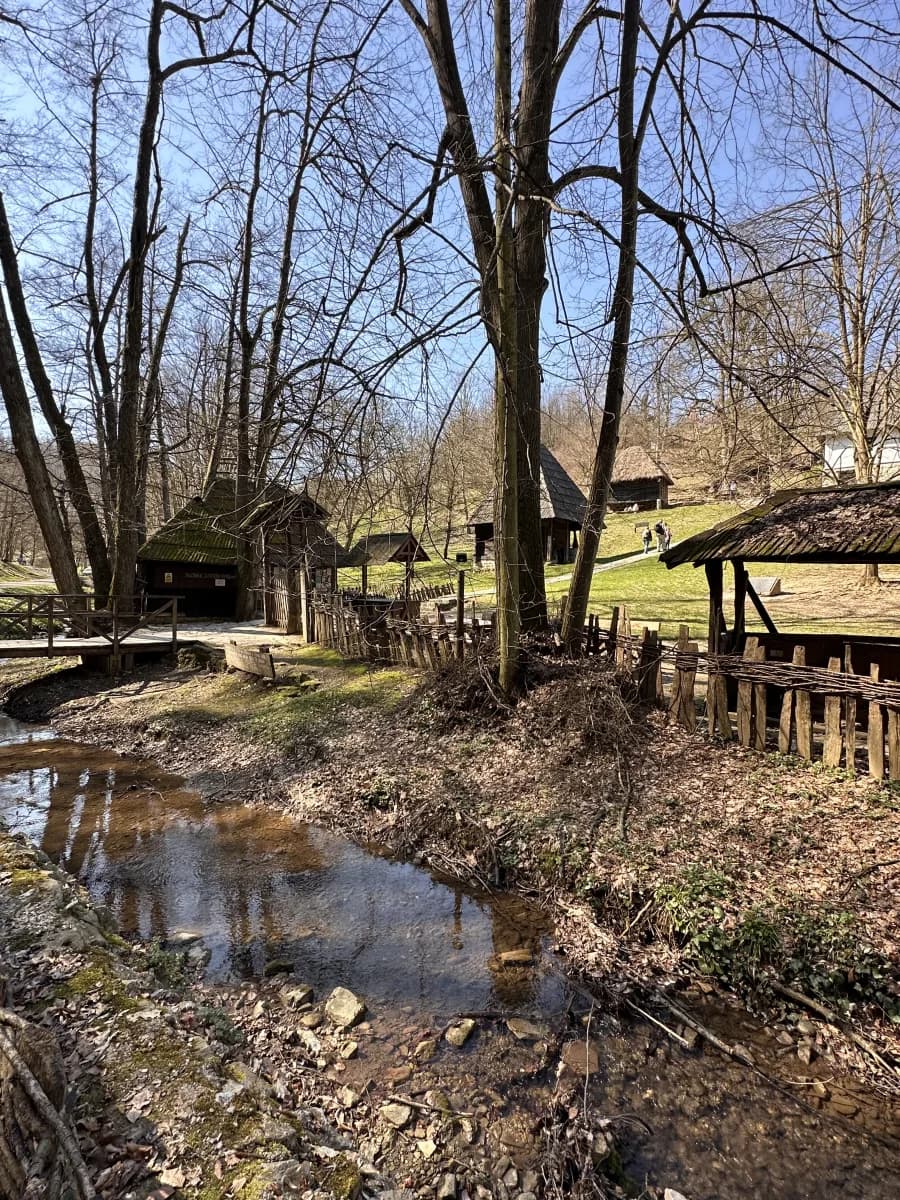
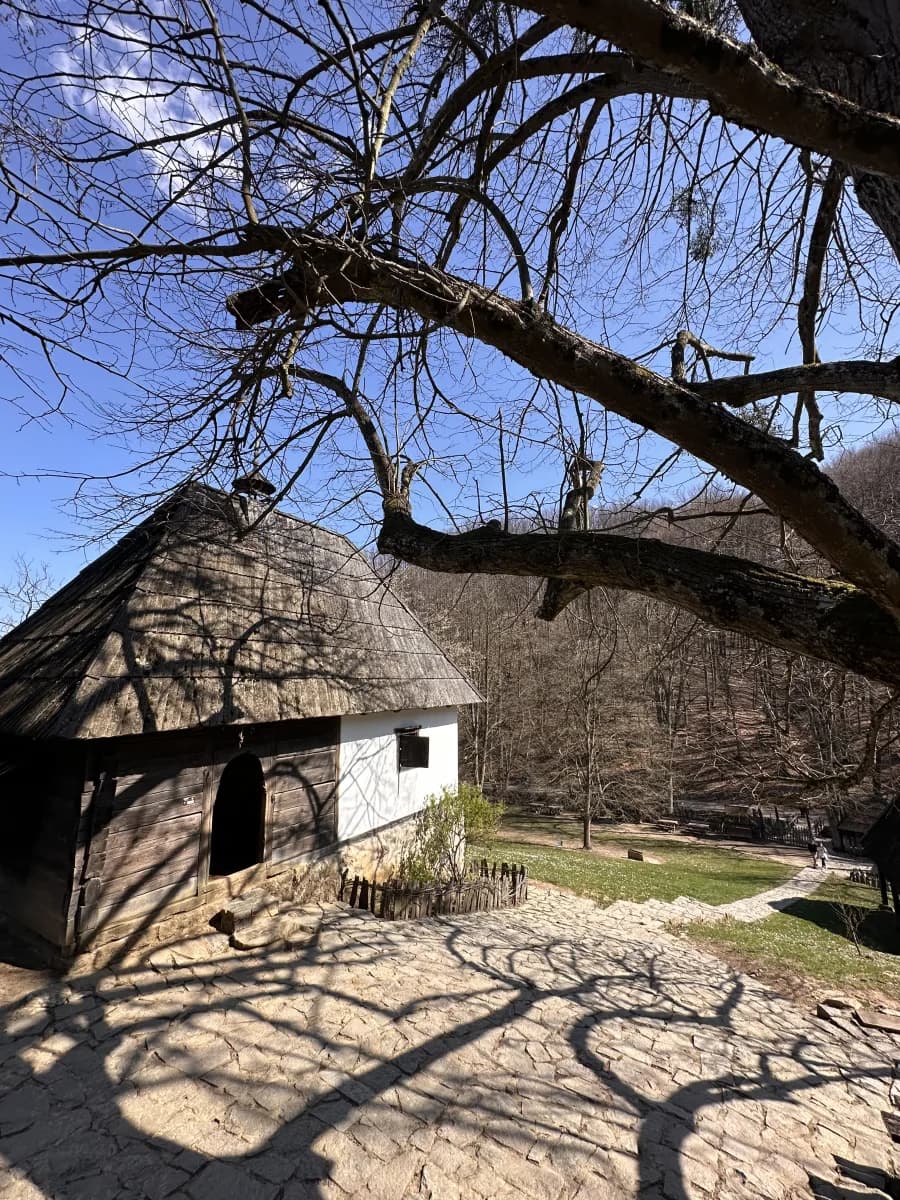
Wooden houses, steep roofs, fences, watermills, small outbuildings and little bridges are arranged along the water just as they once were part of everyday life. Nothing here feels as though it was placed merely for show. The space has its own logic, its own tranquility and the distinctive appearance of a Serbian village from the late 18th and 19th centuries.
And in that village, in 1787, Vuk Stefanović Karadžić was born.
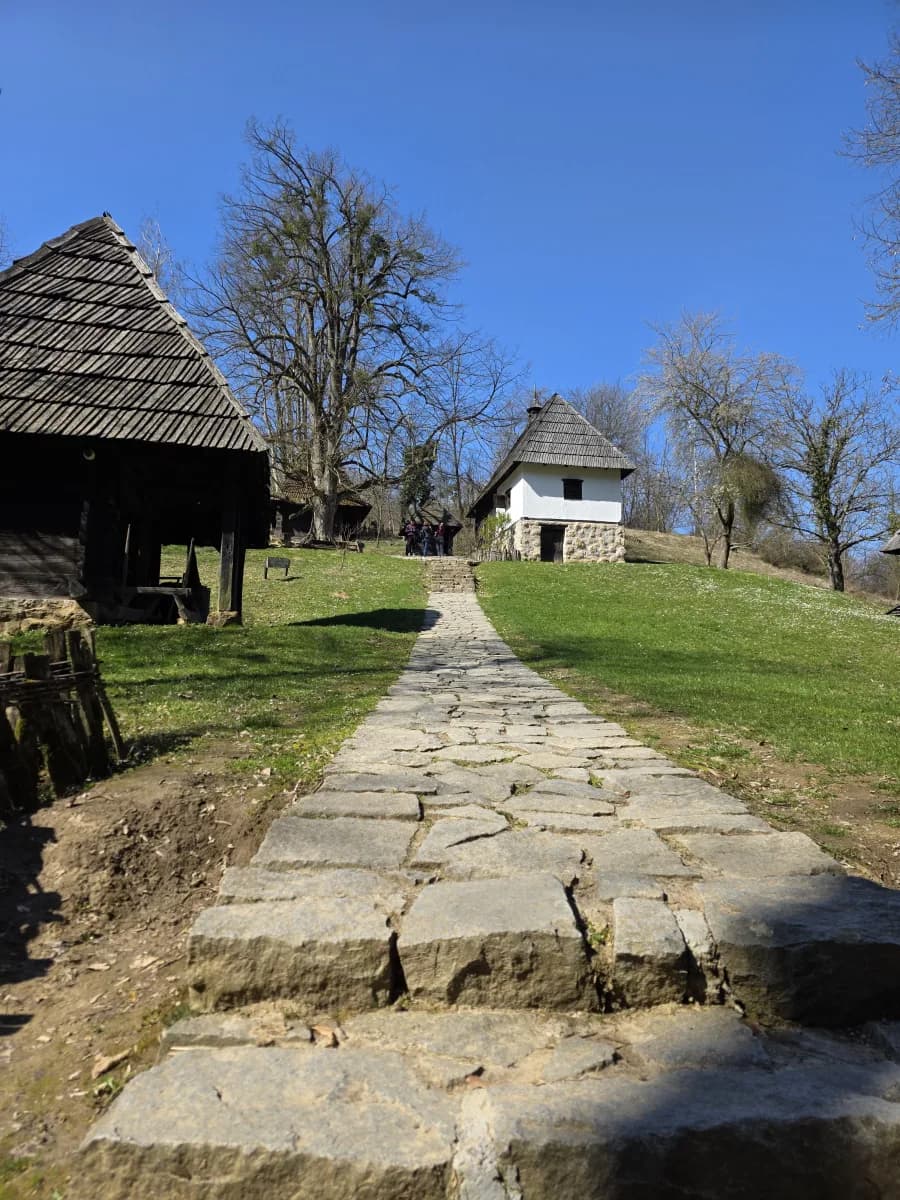
His name today stands alongside one of the most important changes in the history of Serbian culture. But before he became a language reformer, collector of folk songs and proverbs, writer and chronicler of his people, he was a boy from Tršić.
That is why the value of this place also lies in the fact that it speaks not only of the Vuk he would become, but also of the world from which he carried the language he would later record and preserve.
Vuk's House
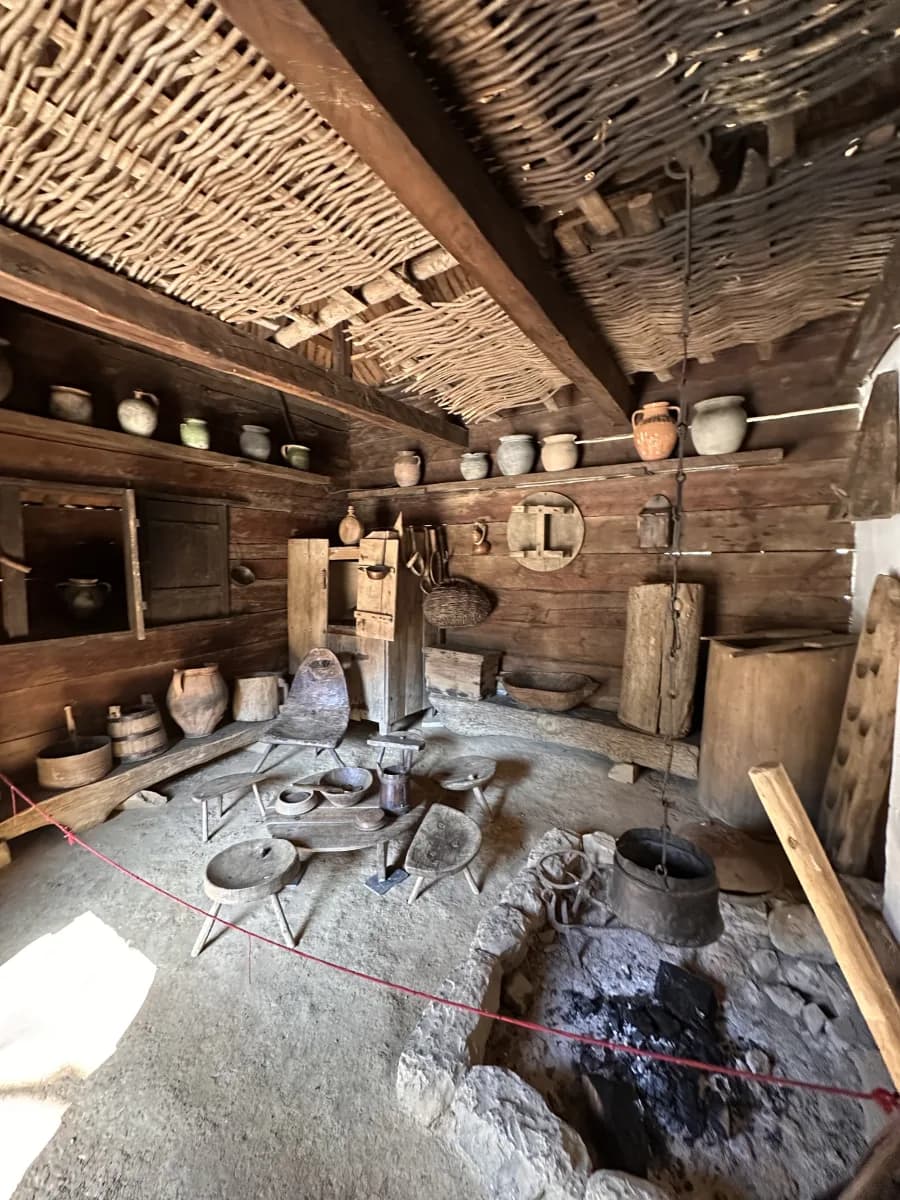
On the site where Vuk's birth house once stood, there is now a memorial house, arranged in the spirit of a traditional household of that time.
Its interior is simple: a hearth, wooden furniture, dishes and objects that tell of the life of a family that lived modestly and in accordance with the possibilities of the time.
Yet it is precisely this simplicity that helps us understand the magnitude of the journey Vuk would later undertake.
From such a home came the man who would take the people's spoken language as the basis for the literary language, collect oral literature and record words, proverbs and songs that until then had lived primarily through oral tradition.
When you step in front of his house, that historical journey no longer seems so distant.
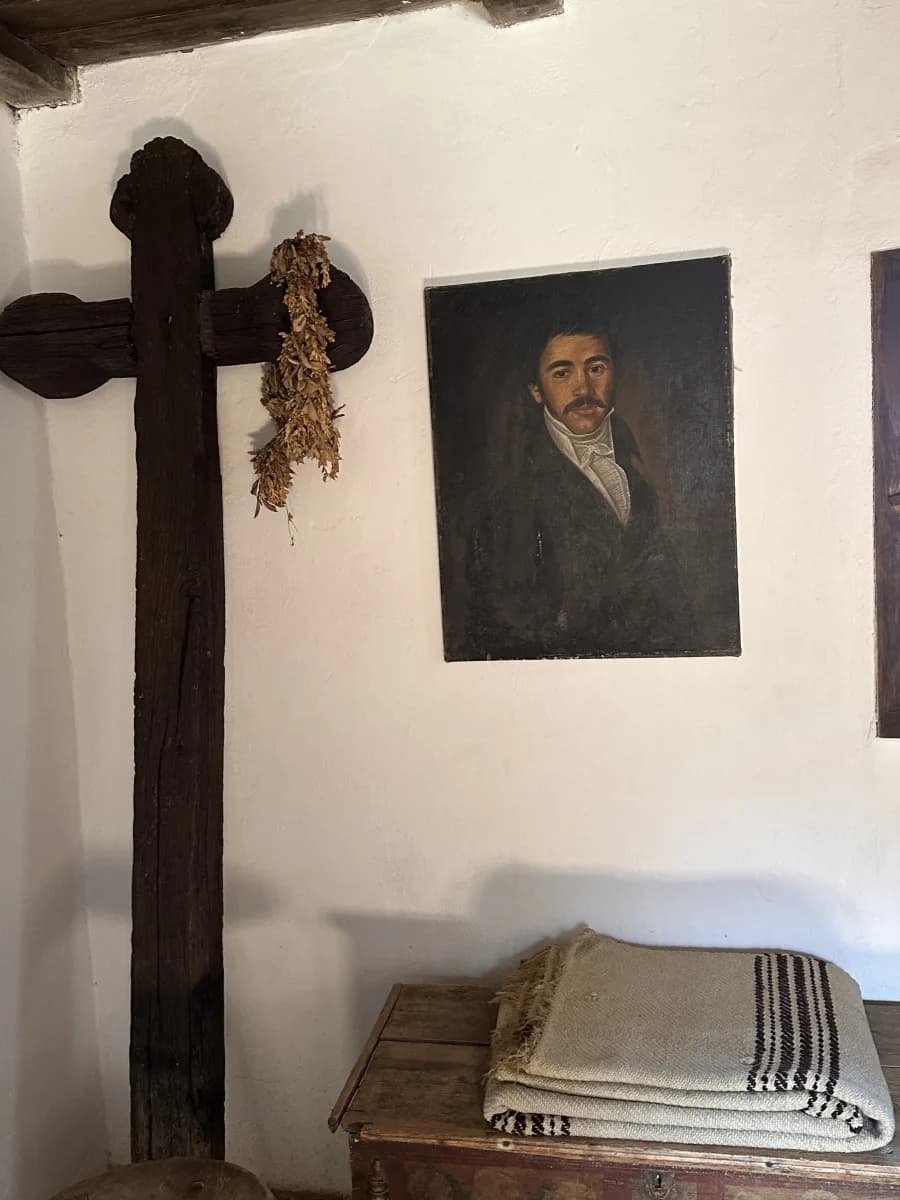
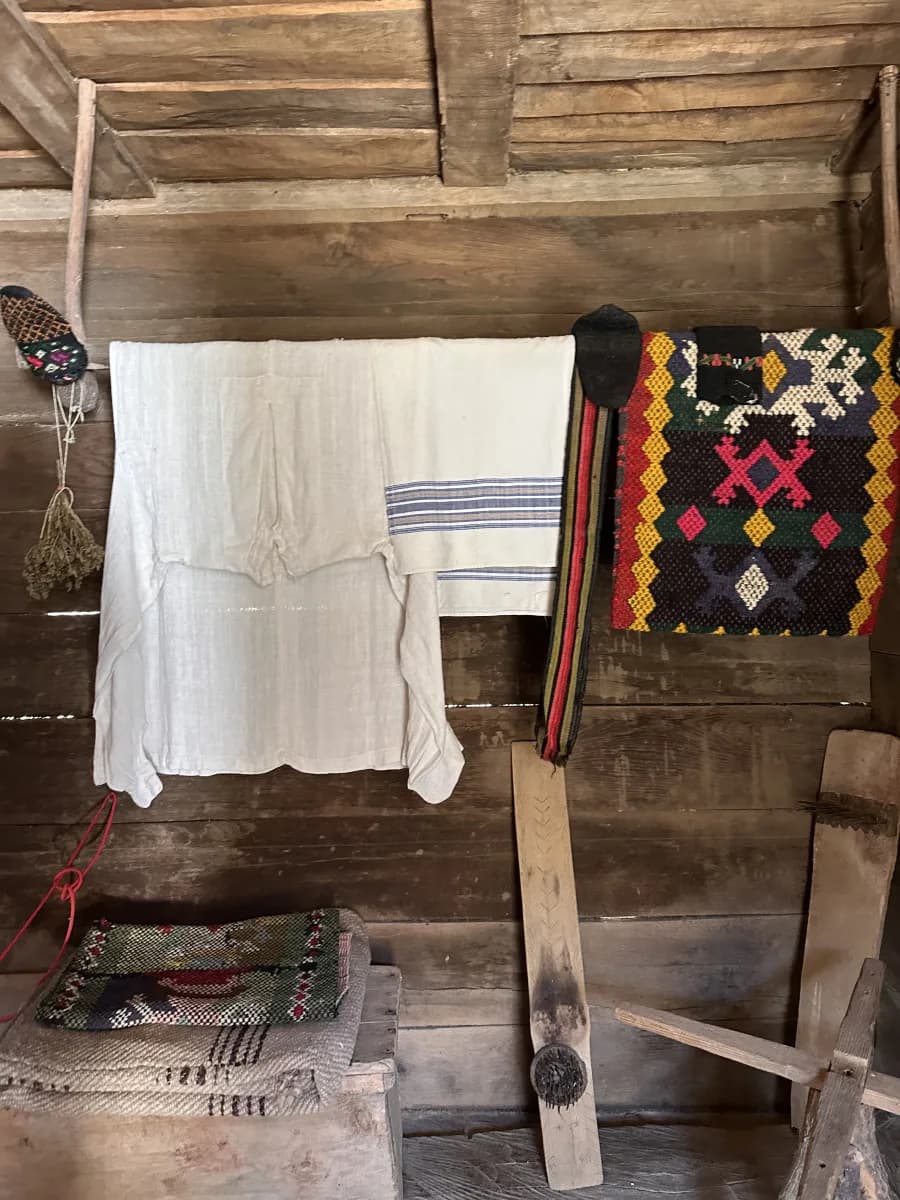
A Picture of a Serbian Village
The uniqueness of Tršić lies not only in its individual buildings, but in the whole that has been preserved.
Small outbuildings, dairies, cooperages, granaries and watermills show what a household looked like in which every building had its own purpose. Watermills, once an important part of village life, are now reminders of a time when flour, food and firewood were obtained differently than they are today.
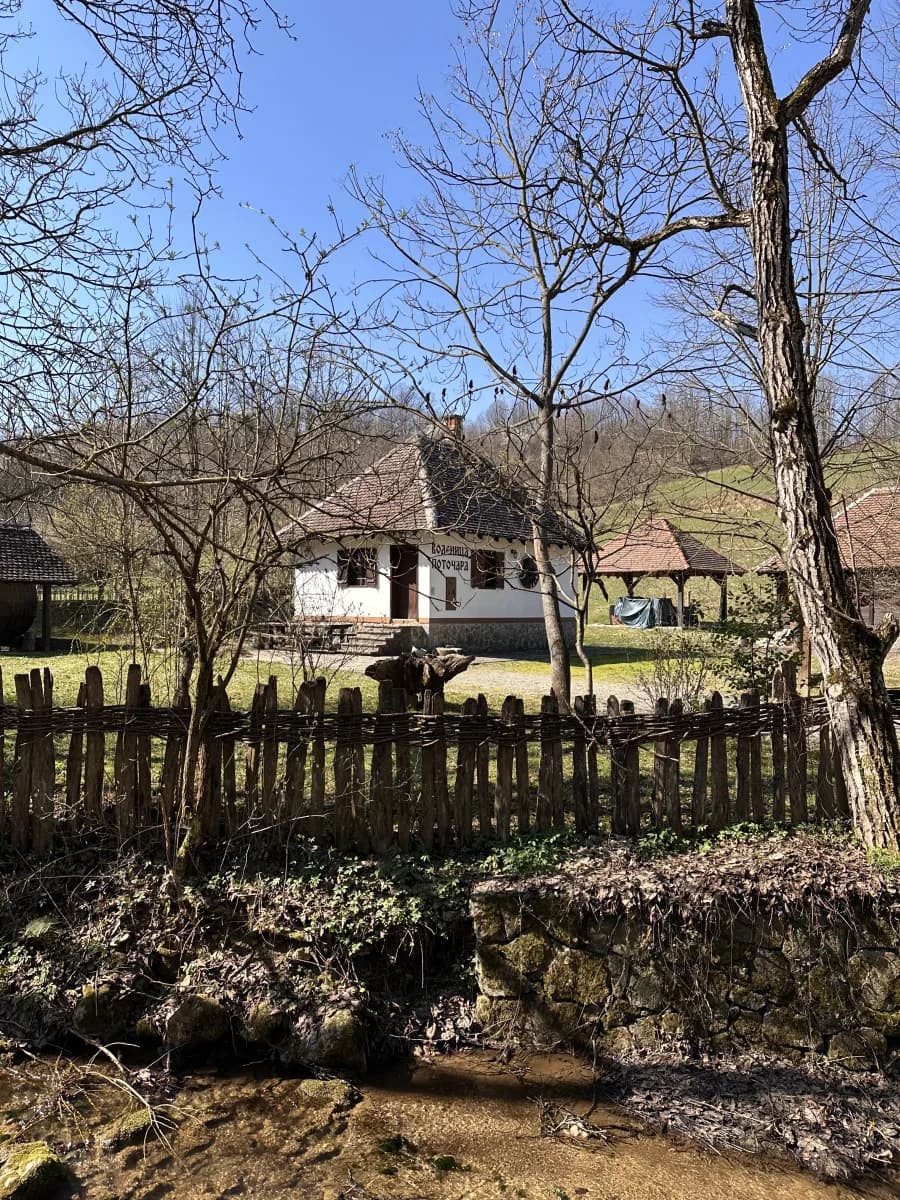
The Žeravija flows between these houses and buildings. Its course is the natural axis of the entire area, and the sound of the water accompanies visitors as they walk through the complex.
That is precisely why Tršić is not a classic museum where history is viewed behind glass. Here, it is spread throughout the landscape.
It can be seen in the roofs, fences, wood darkened by time, in the way the houses face one another and in the relationship between the house, the courtyard and the water.
From Tršić to Tronoša
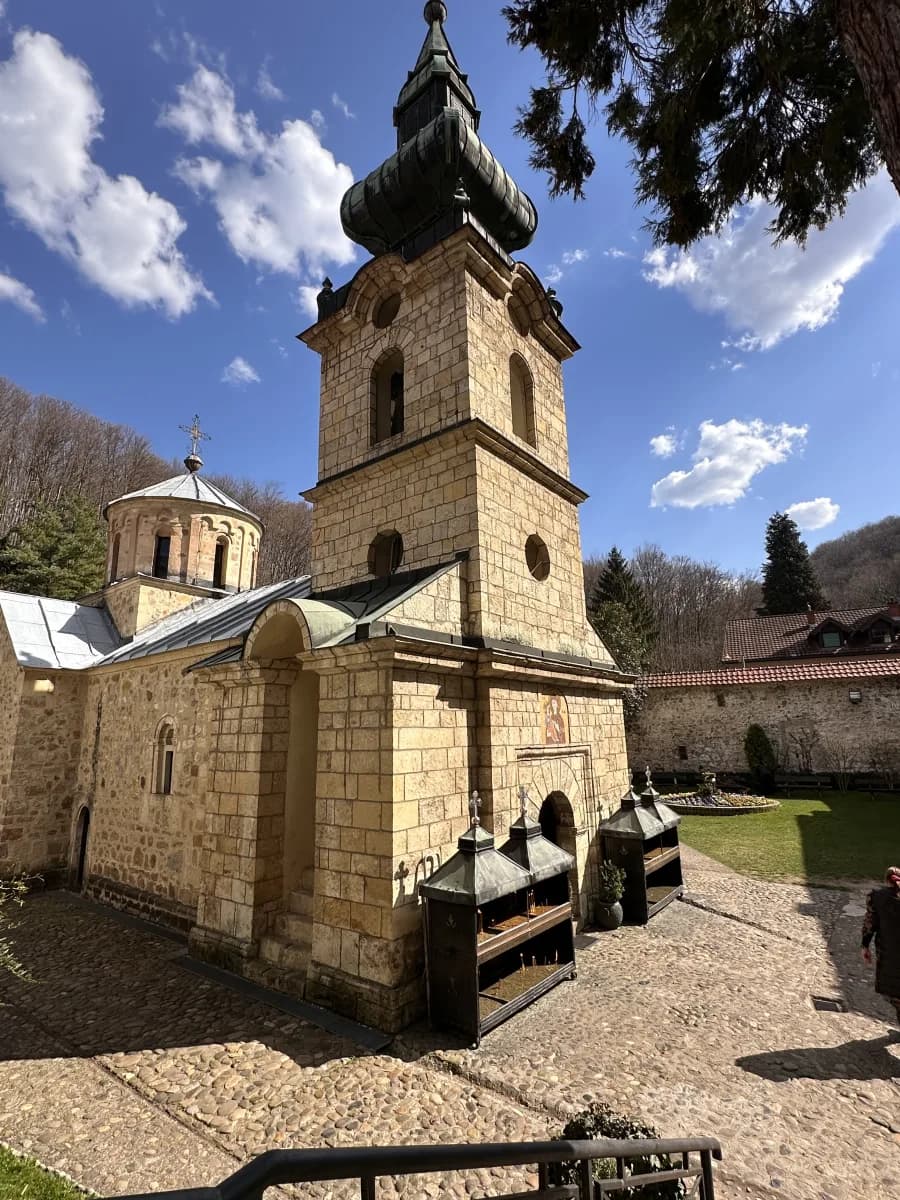
Just a few kilometres away is Tronoša Monastery, another important place in Vuk's story.
Although we could not walk along the forest paths that little Vuk hurried along on his way to school, we reached the monastery in less than 15 minutes via a modern road and stepped into a magnificent setting that radiates peace and grandeur.
It was at Tronoša that Vuk acquired his first knowledge of literacy, and the monastic surroundings left a mark on his early education. According to a well-known tradition, he learned his first letters by writing them with charcoal on birch bark.
Between Tršić and Tronoša, one can thus trace part of his life journey - from his native village and the people's spoken language to his first encounters with the written word.
Anyone wishing to devote an entire day to this region can naturally visit these two places together.
A Place of Living Tradition
Tršić has not remained trapped in the past.
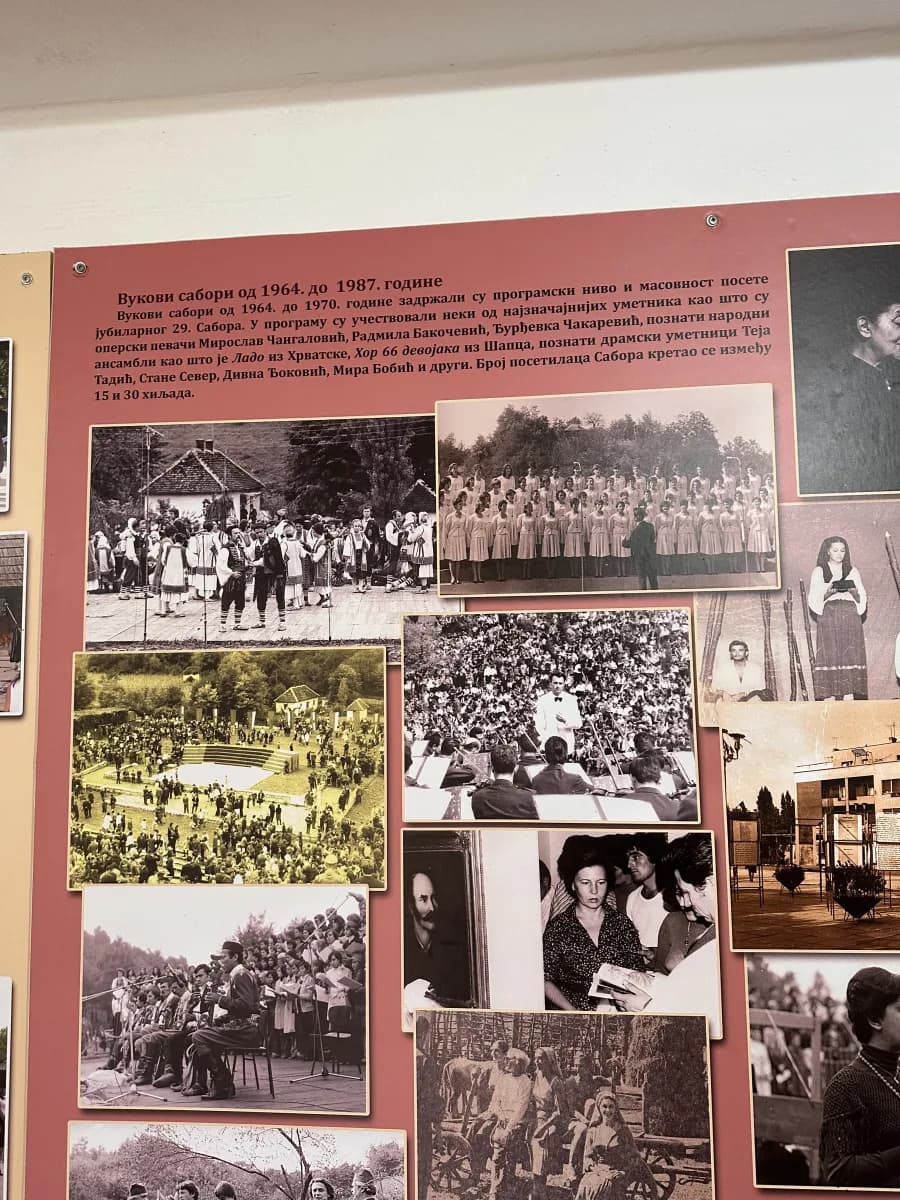
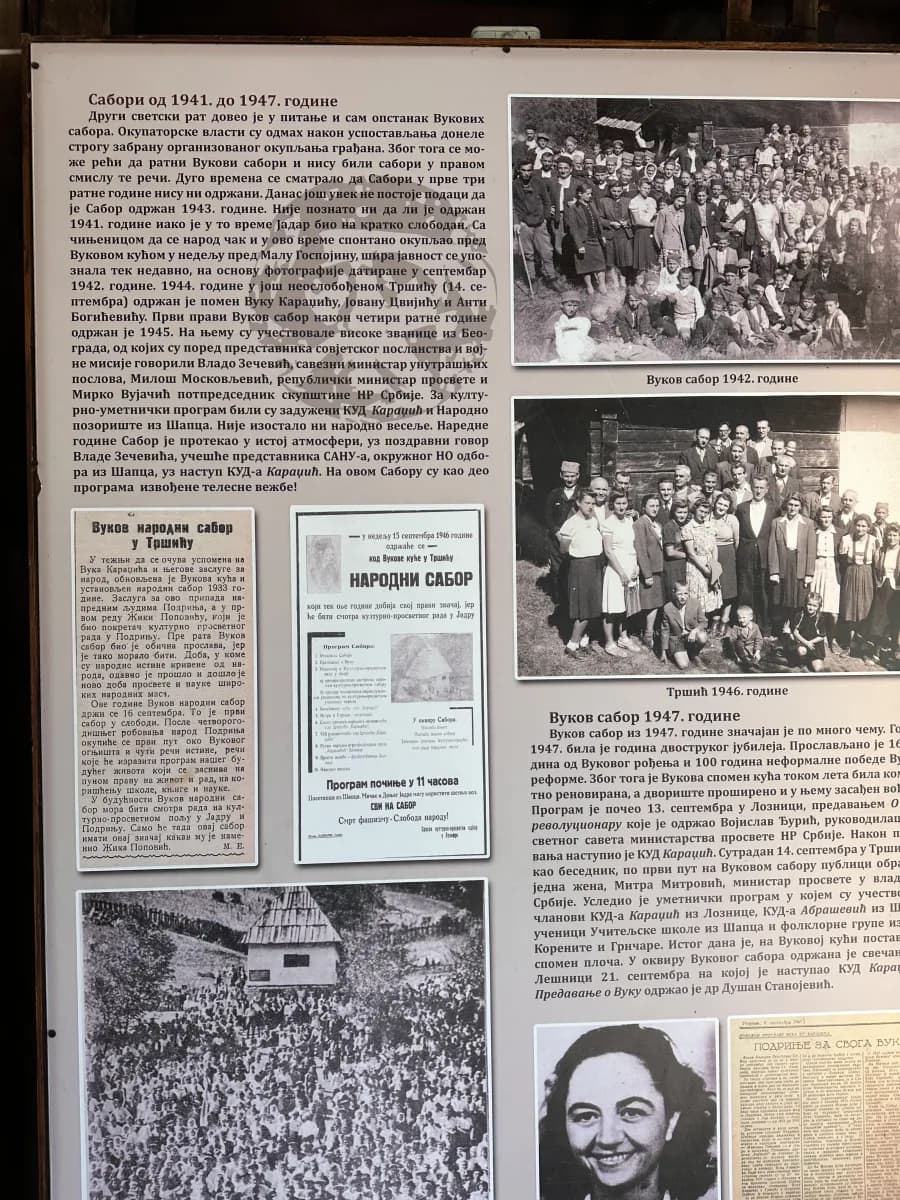
Every September, Vuk's Assembly is held here, an event dedicated to Vuk and his work that has been bringing together writers, artists, scholars, cultural workers and numerous visitors for more than half a century.
During those days, Tršić is especially lively. A place otherwise characterized by silence and a slow pace fills with conversations, music, literature and encounters.
And when the assembly is over, the village returns to its usual tranquility.
Perhaps that is when it is easiest to feel its true character.
To sit in the shade, hear the Žeravija and look at the old houses that have survived centuries of change.
The Flavours of the Old Region
The story of this area is also complemented by traditional cuisine.
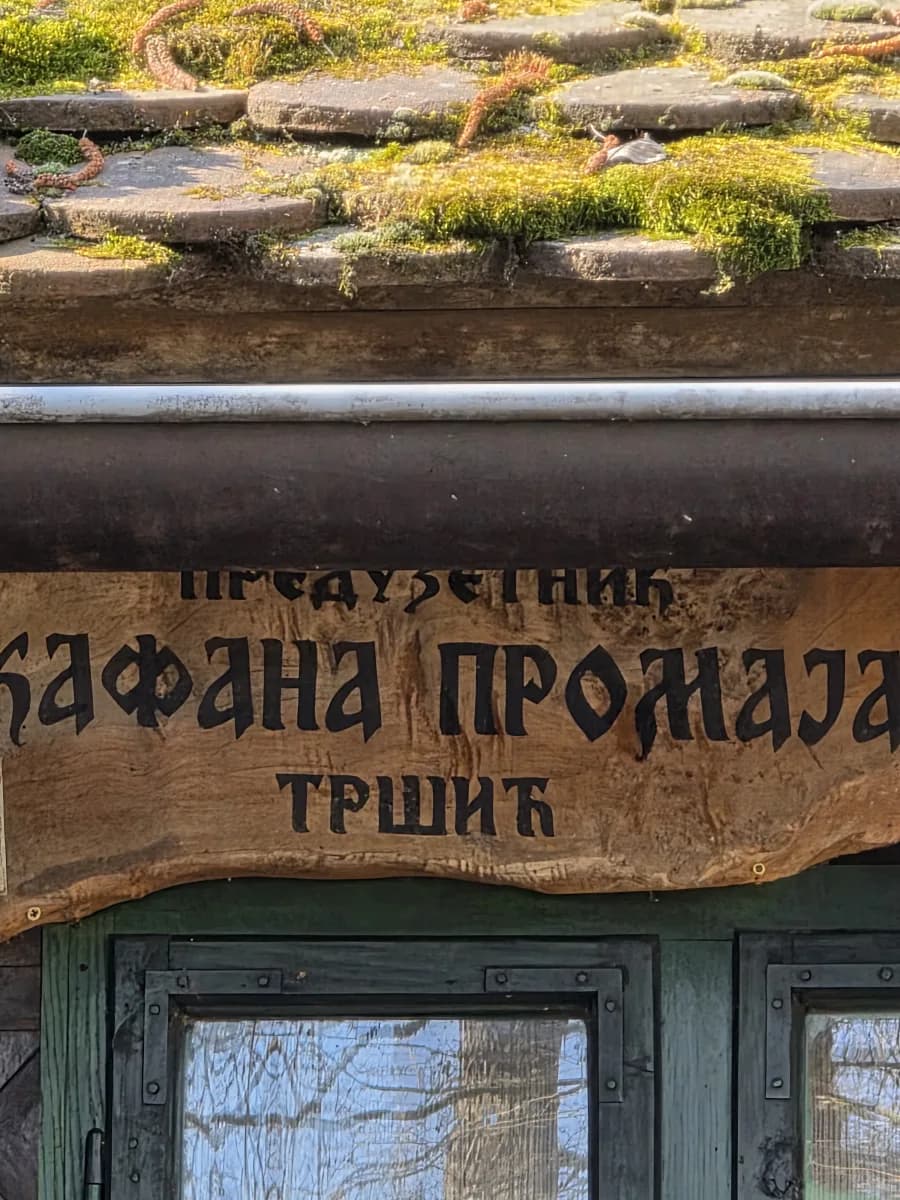
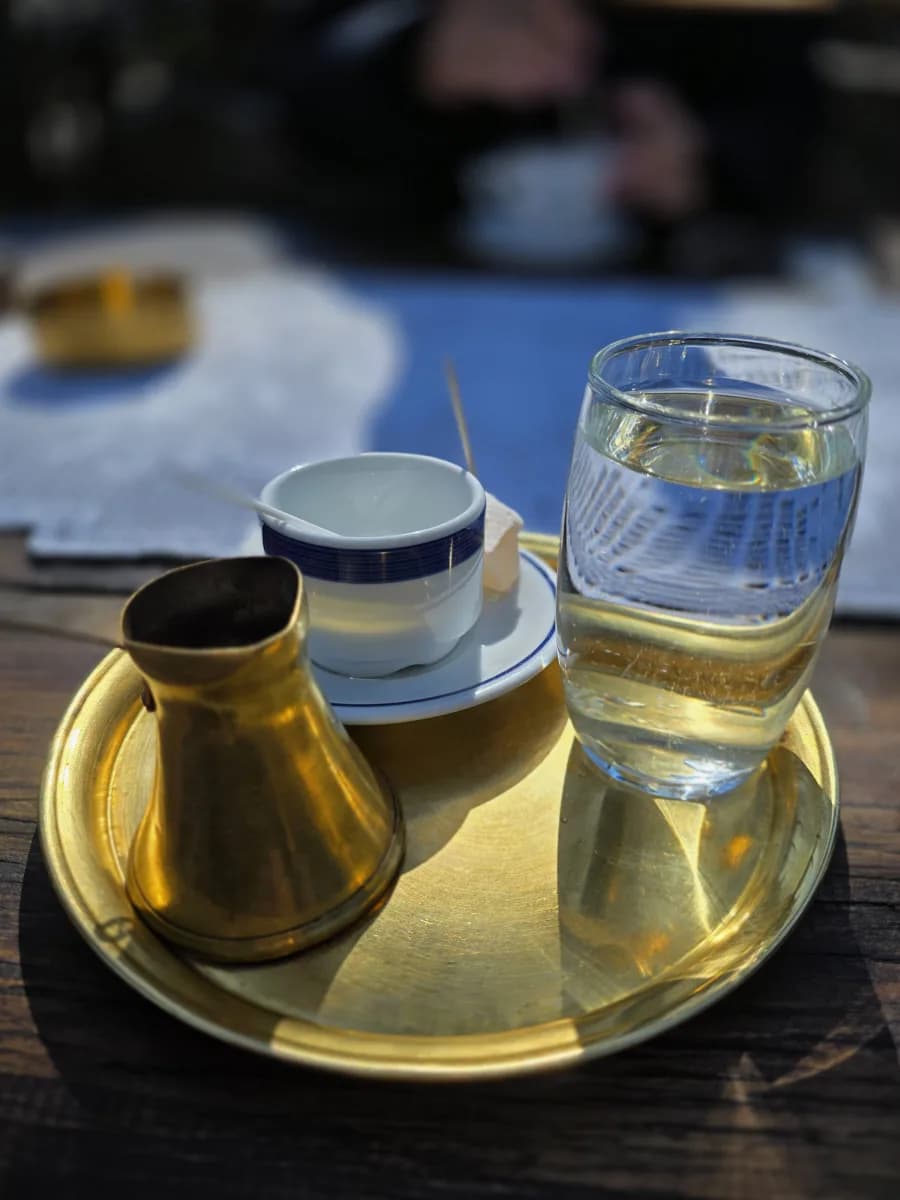
In the ethno-restaurants and households in the surrounding area, you can try dishes characteristic of this region - homemade bread, cheese, kajmak and other simple homemade foods.
This is not merely a gastronomic part of the visit. Food here is part of the same story as the houses, hearth and watermill, reminding us of a way of life in which much was produced within the household and the dining table was one of the centres of family life.
Where Vuk's Story Began
When you leave Tršić behind, you are not leaving behind just a museum complex, but the image of a village and an era, as well as the thought of how much can be carried from a small place into the wider world.
Vuk carried with him from Tršić the language of his people, their songs, stories and proverbs. He would later collect, record and publish them, and his work would transform the Serbian literary language and the way in which a people preserved and presented its oral tradition.
That is why Tršić is worth seeing even without a special occasion.
And when, at the end, you walk along the Žeravija once again and look at the wooden houses beneath the green hills, it becomes easier to understand why Vuk carried so much from this region that would later become part of the cultural memory of an entire people.
More about Vuk Stefanović Karadžić