
On the journey through Mačva, between the plains and the Drina region, Cer rises above the landscape. It is not a high mountain, nor does it take much time to reach its wooded slopes, but there are few places where nature and history come into such direct contact.
The mountain takes its name from the cer oak, a species of oak that is widespread in this area, while its forests are today a popular destination for excursions, hiking and relaxation.
Yet Cer is best known for the events of August 1914, when the Battle of Cer was fought on its slopes—the first major victory of the Serbian army in the First World War.
The best way to discover Cer is to start from Tekeriš, a place that has become one of the most important memorial sites associated with the Great War.
Tekeriš – A Place of Remembrance of the Battle of Cer
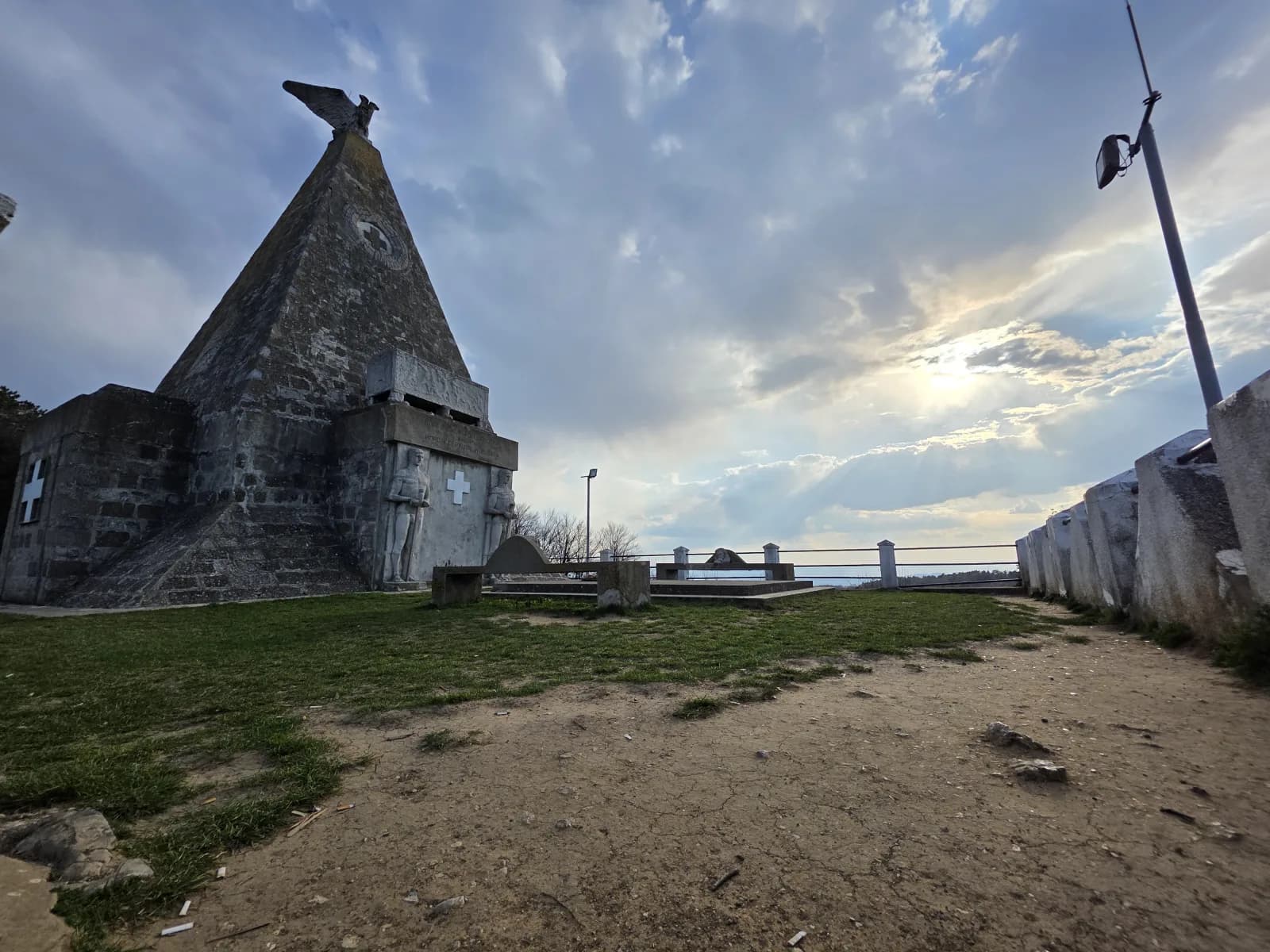
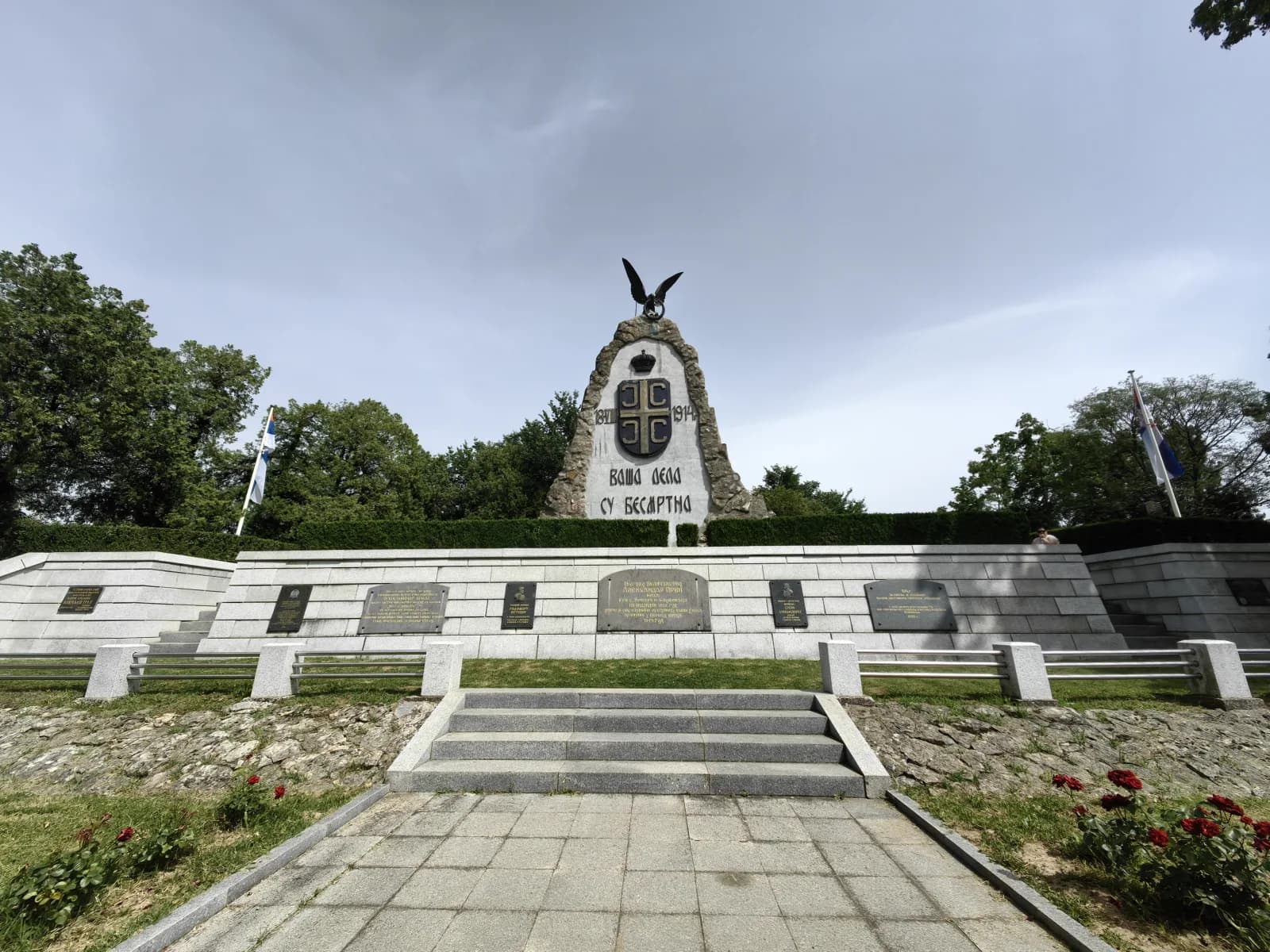
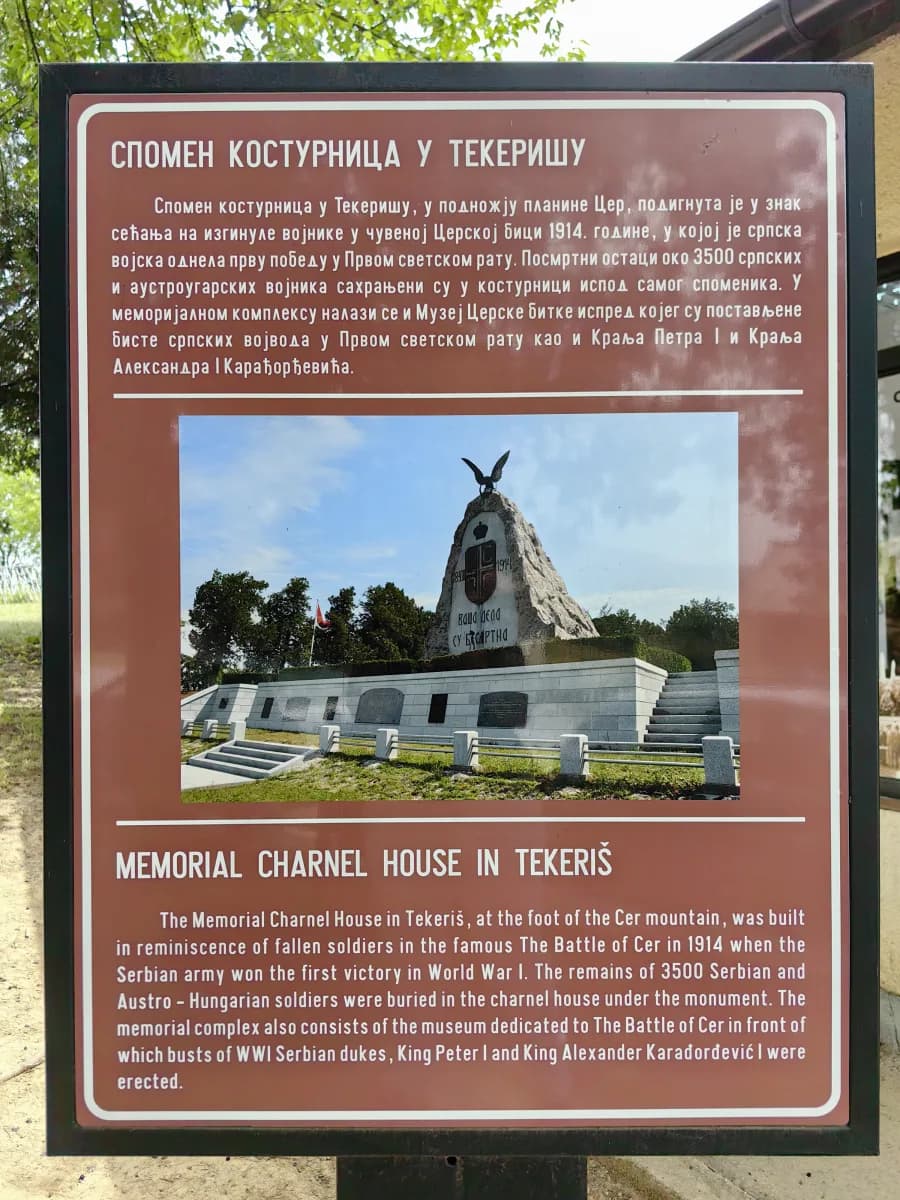
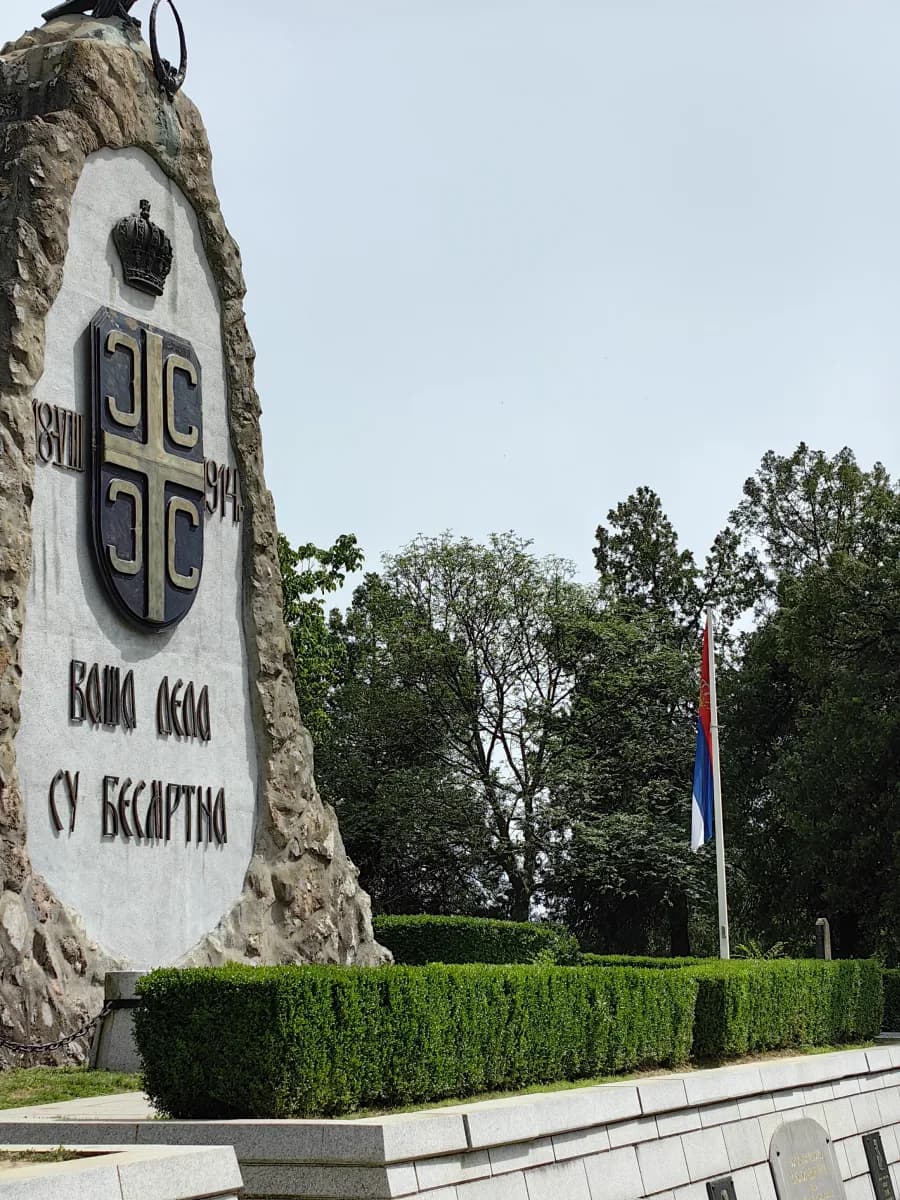
In the village of Tekeriš stands a monument with an ossuary dedicated to the soldiers who lost their lives in the Battle of Cer.
It was erected in 1928, and its distinctive silhouette consists of a stone pyramid-shaped monument topped by a bronze eagle holding a laurel wreath in its beak. The monument and ossuary stand 18 metres high.
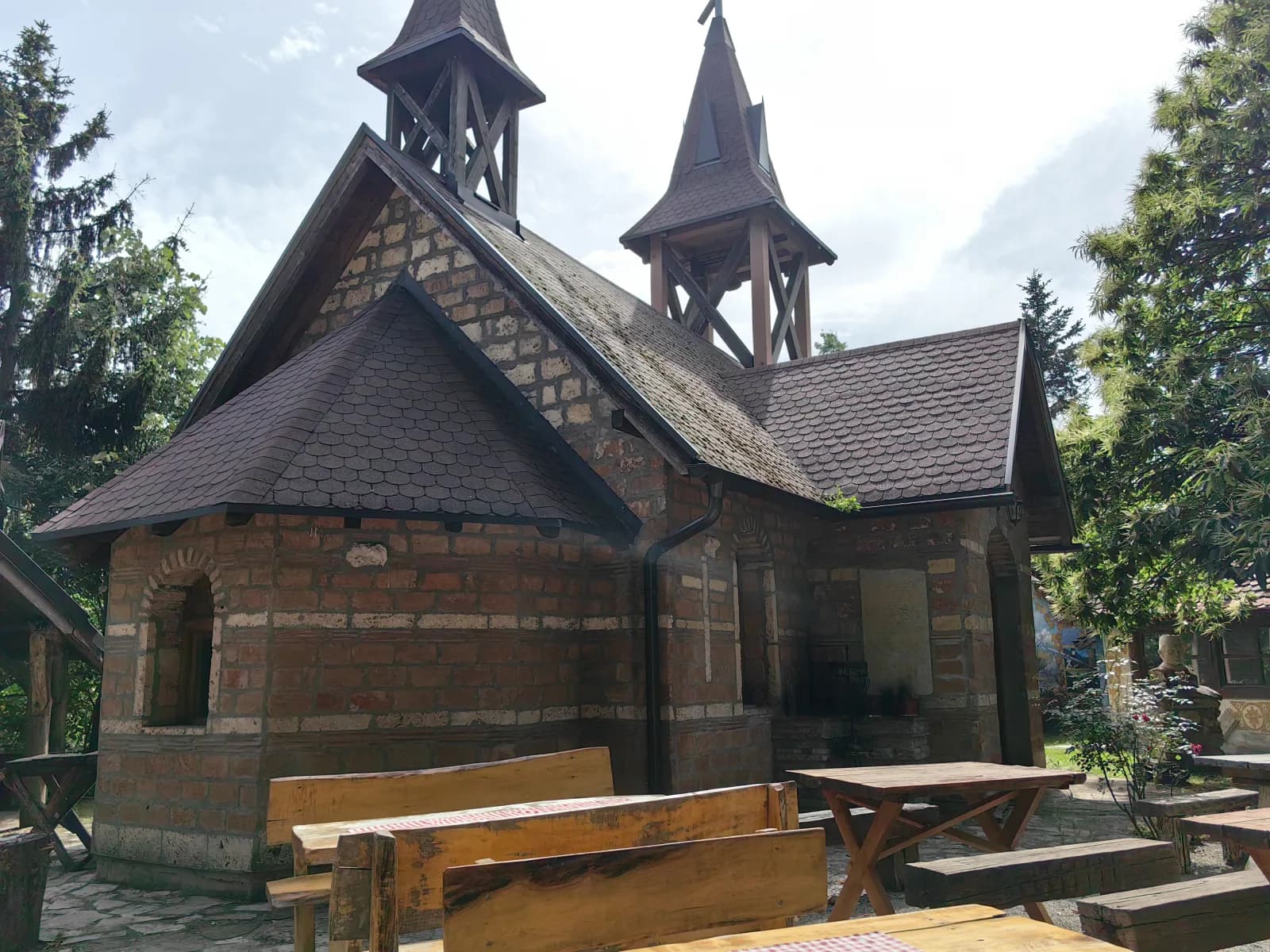
Nearby is a museum exhibition dedicated to the Battle of Cer. The permanent exhibition is housed in a former chapel and brings the events of August 1914 closer to visitors through photographs, maps and artefacts.
Tekeriš is a place where history is not merely recorded in books. It stands before visitors in stone, on memorial plaques and in the silence of the place where the fallen soldiers were laid to rest.
From here, the road continues deeper into Cer.
Lipove Vode – The Starting Point of the Mountain Trails
One of the best-known places on Cer is Lipove Vode, a mountain plateau at an elevation of around 620 metres. Here you will find the mountain lodge of the same name, offering accommodation, a kitchen, sanitary facilities and space for tents. Marked hiking trails start from the lodge.
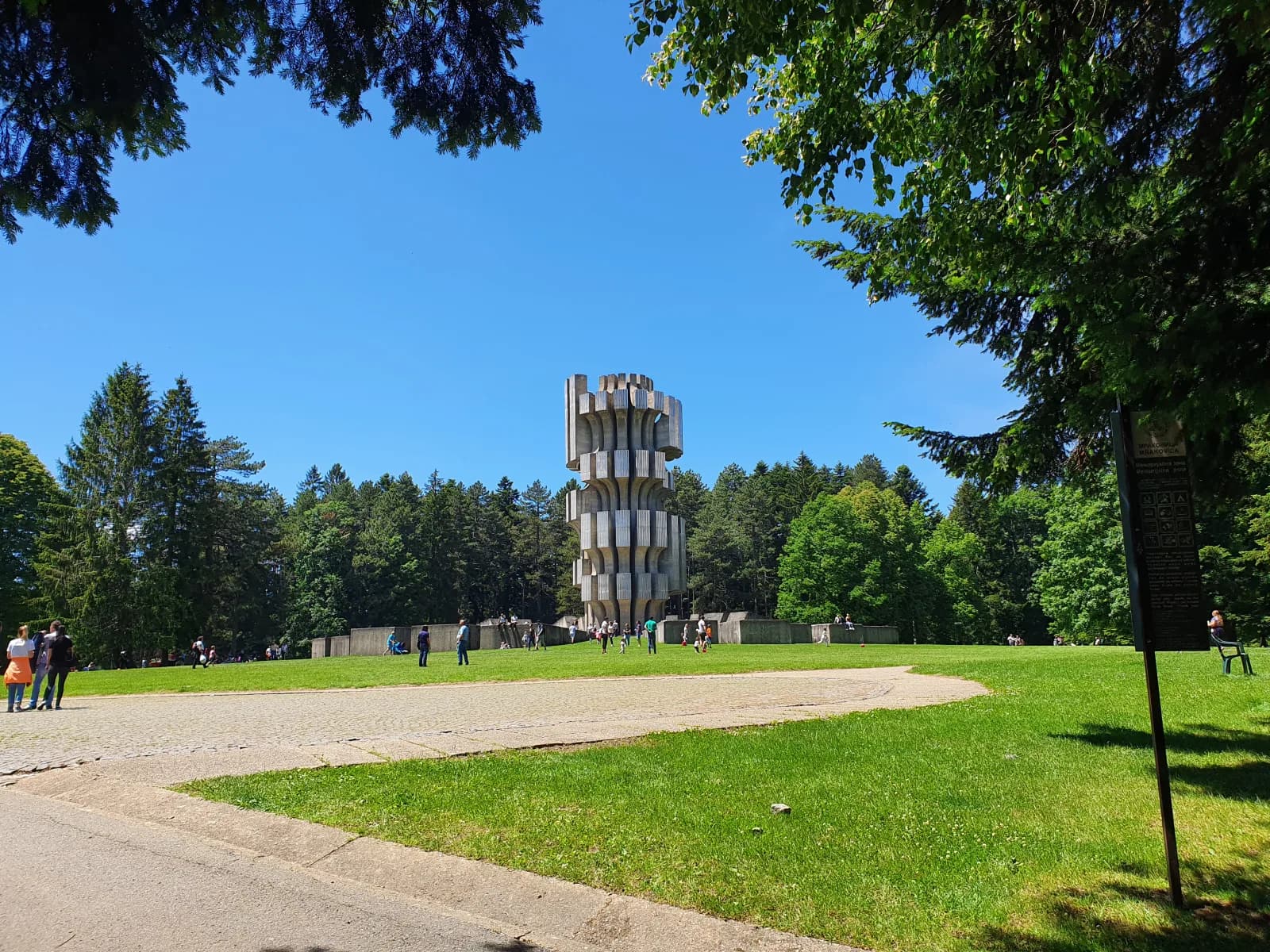
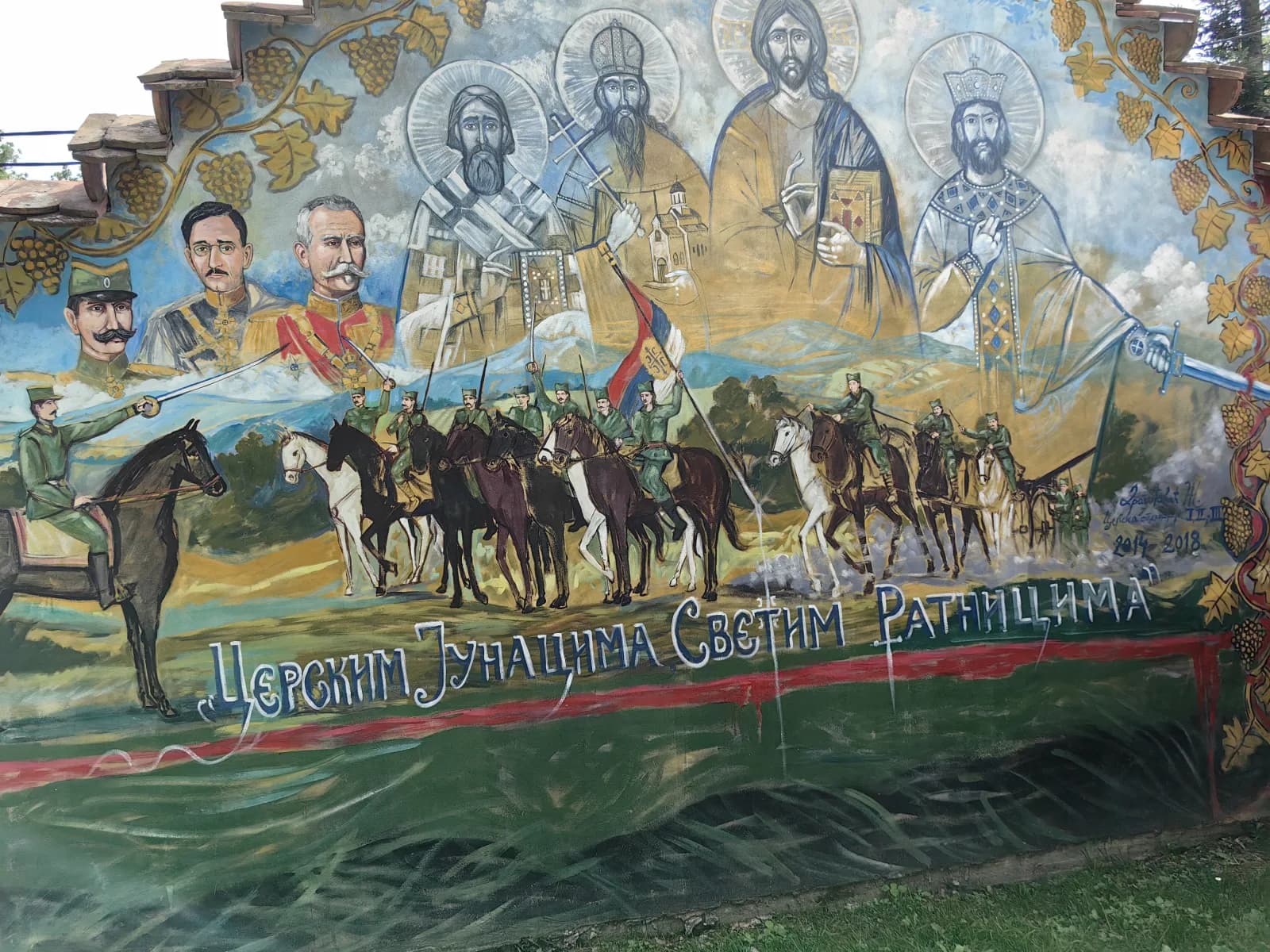
Lipove Vode are also significant because of their historical role during the Battle of Cer. Today, the forest, tranquillity and greenery make it difficult to imagine how important this area was for the movement and fighting of the Serbian army more than a century ago.
In the immediate vicinity of the Lipove Vode picnic area, surrounded by dense oak and beech trees, stands a church dedicated to Saint John of Shanghai.
This modest yet exceptionally warm wooden church was built in memory of all the heroes of Cer, providing hikers and passers-by with a quiet place for prayer and rest.
Further on, one of the better-known hiking routes leads from Tekeriš via the Monument to the Heroes of Cer and Trojan's City to Lipove Vode, and then towards Šančine. Other historical and natural sites of Cer can also be found along the same route.
Šančine – The Highest Point of Cer
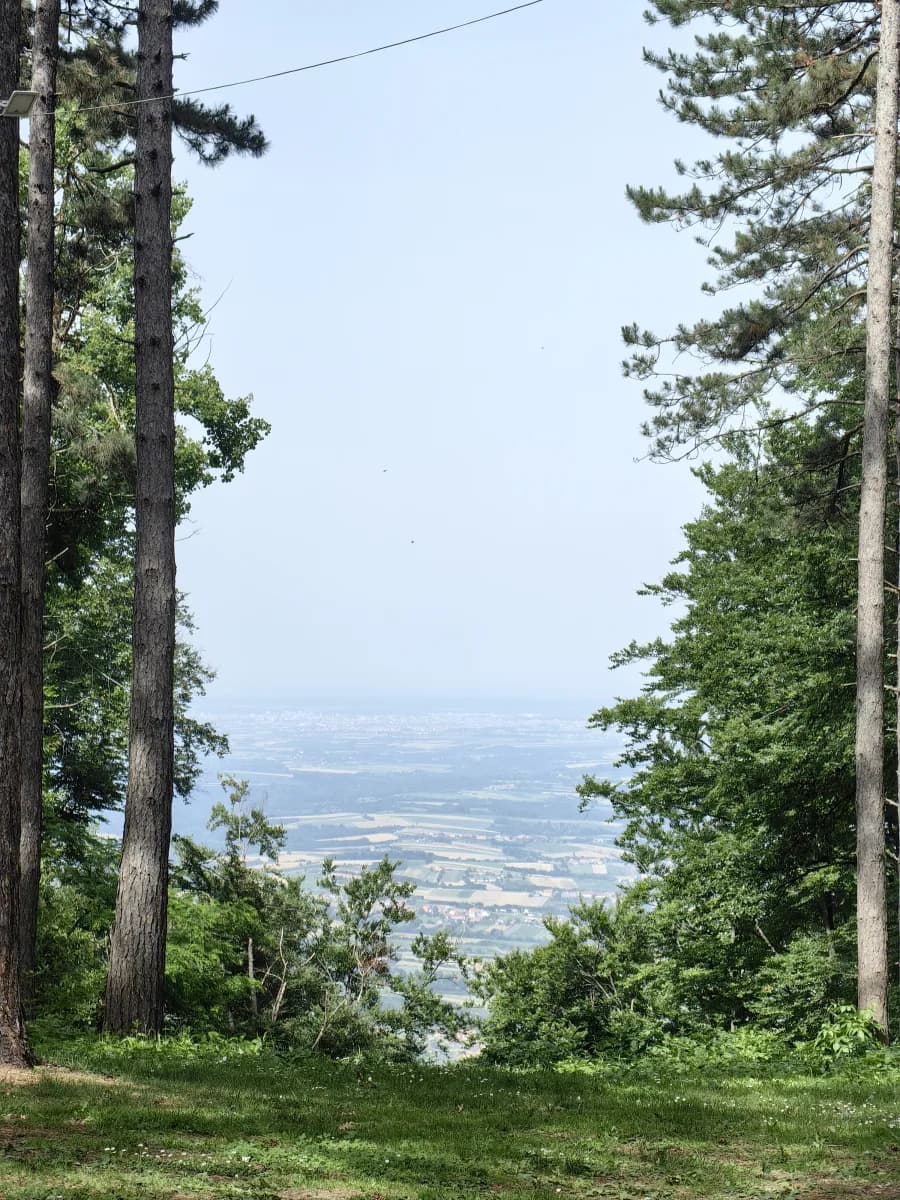
The highest peak of the mountain, Šančine, stands at around 687 metres above sea level. Although Cer cannot be compared in elevation with the great mountain ranges, its position and the open views from certain locations offer a completely different experience of the landscape.
Important clashes took place in the Šančine area during the Cer operation. Today, forest trails lead to places where the past has not completely disappeared from the landscape.
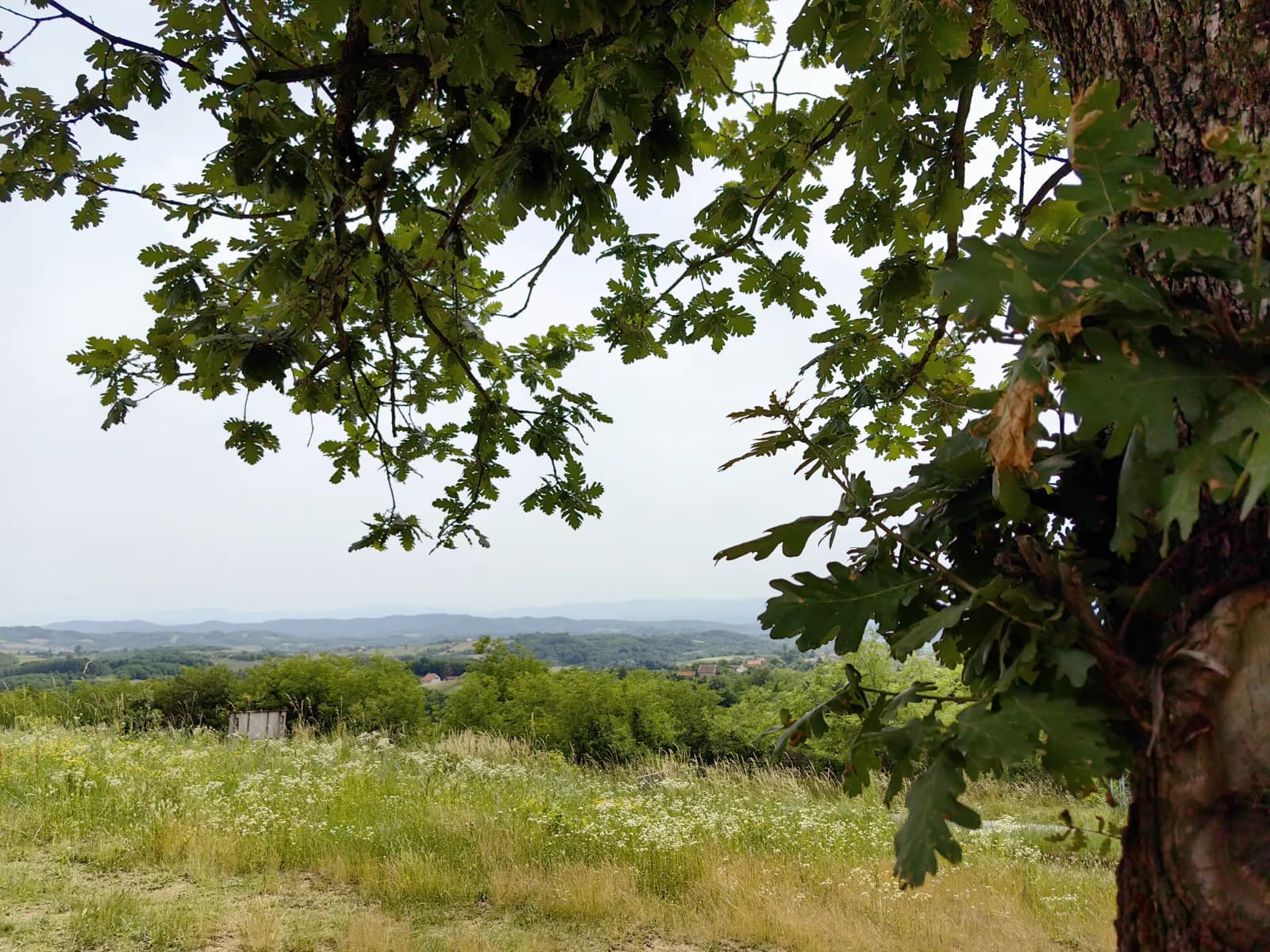
From the mountain clearings, views stretch towards the Mačva plain and the broad landscape of western Serbia. This contrast—the peaceful villages and fields below the wooded Cer—best illustrates how strategically important the mountain's position was during the war years.
Trojan's City and a Story That Has Survived the Centuries
Cer is not interesting only because of the events of the 20th century. The mountain is also home to the remains of older fortifications, the best known of which is Trojan's City.
Hiking trails lead to it, with one of them connecting Tekeriš, Trojan's City and Lipove Vode.
The ruins are associated with the legend of Emperor Trojan, a mythical ruler whose name has remained connected with this region in folk tradition. Over the centuries, the legend has also linked his name with other fortifications and places on Cer and in its surroundings.
The historical remains of the fortification speak of a much older era than the one remembered in the stories of the Battle of Cer. This is precisely what makes a walk through this part of the mountain more than just an excursion into nature—within just a few kilometres, visitors can trace the layered history of the area, from the Roman and early Byzantine periods to the First World War.
Cer Between History and Nature
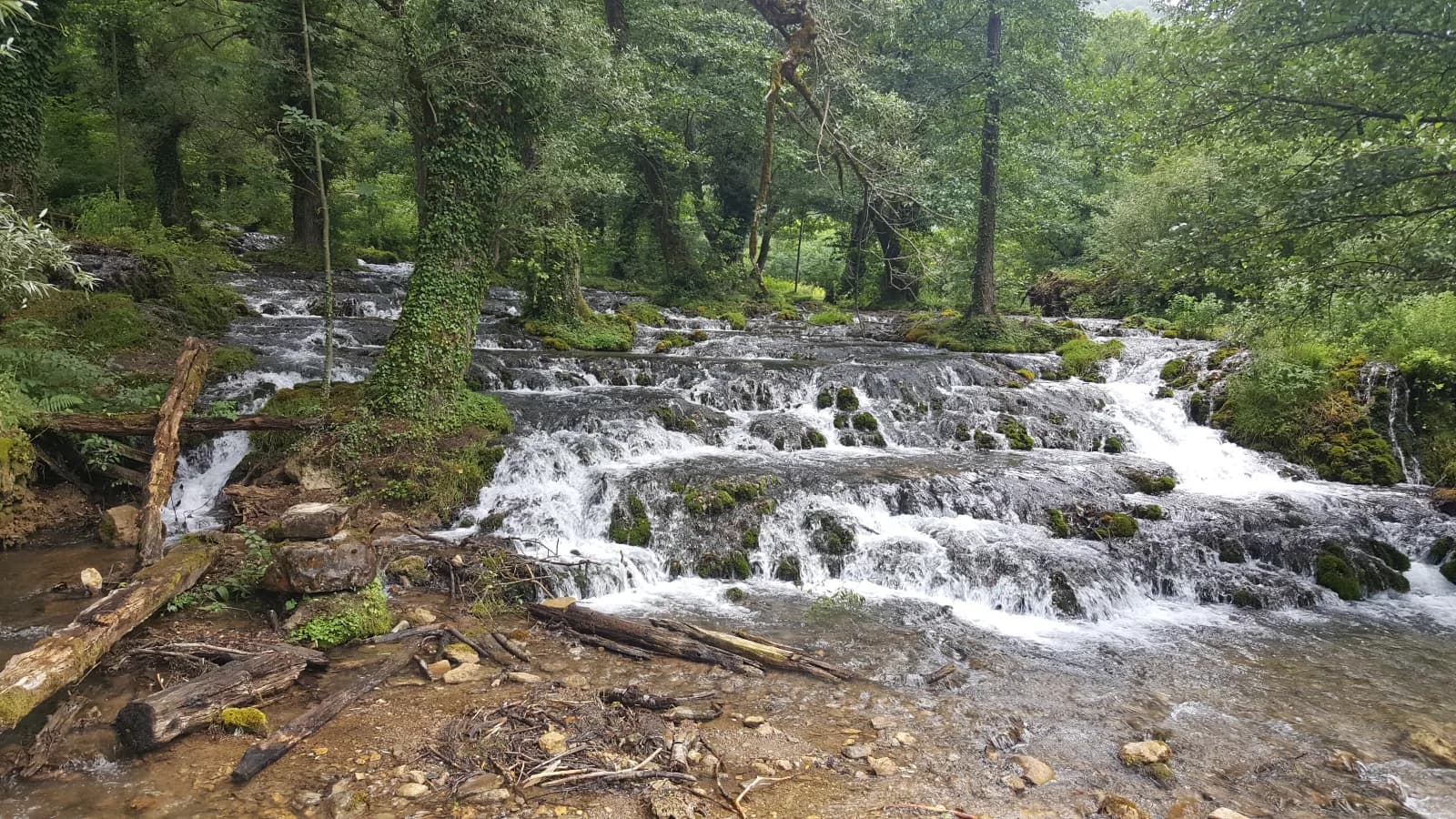
The uniqueness of Cer lies precisely in the fact that neither of these two sides overshadows the other. Forests, mountain trails, springs and viewpoints make it ideal for excursions and hiking, while Tekeriš, Šančine, Trojan's City and other sites serve as reminders of events that have left a deep mark on the history of this region.
The Mountaineering Association of Serbia currently lists several trails on Cer, varying in length and difficulty. Among them is the 23-kilometre “Trails of Cer” route, which connects Tekeriš, Trojan's City, Lipove Vode, Šančine, Kosanin City and Čokešina Monastery.
Cer is a place worth discovering. Stop in Tekeriš, before the monument and ossuary, and then continue along the forest trails.
In the end, what remains is the image of a mountain that, throughout different periods, has been a natural refuge, a strategic point and a place where the paths of people, armies and legends have crossed.